
Luxury Homes in Japan: Best Areas, Buying Process, and Key Considerations
Aug 5, 2026
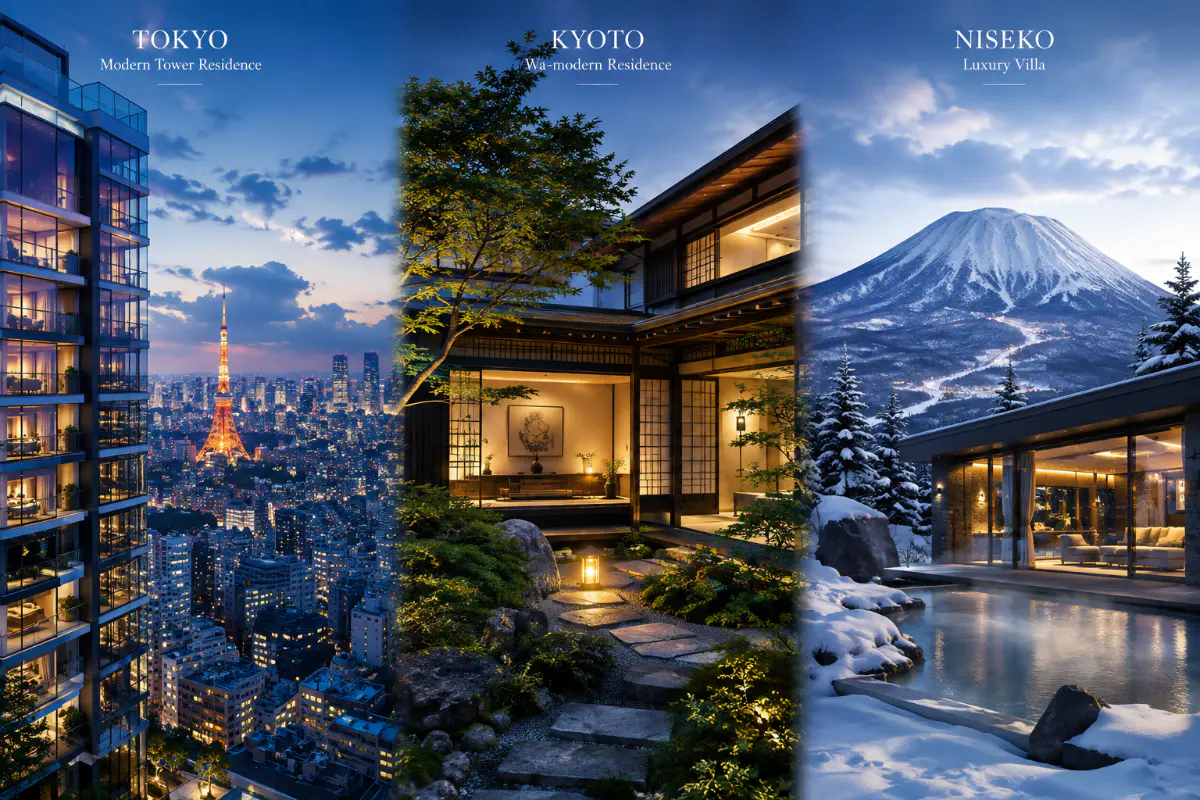
Interest in high-end homes in Japan is growing among overseas investors and overseas buyers seeking a second home or future residence. Options range from high-end condominiums in Tokyo and traditional homes in Kyoto to ski resort properties in Niseko and Hakuba, as well as vacation homes in Karuizawa.
The right property depends on your goals, whether you are buying for investment, personal use, or a potential future move. This guide introduces the key premium property markets in Japan, the buying process, and important points to consider before purchasing.
Browse luxury properties for sale across Japan
Where to Buy Luxury Homes in Japan: Key Markets and Property Types
High-end homes for sale in Japan range from high-end city apartments and private residences to historic machiya townhouses, traditional homes, ski resort villas, and vacation properties surrounded by nature. It all depends on your goals, whether you are buying for investment, personal use, a second home, or a potential future move.
Below is an overview of the main types of premium properties and the key areas worth considering.
| Area | Main Property Types | Typical Purchase Goals | Key Considerations |
|---|---|---|---|
| Tokyo | High-end condominiums, centrally located detached homes, high-rise residences | Long-term asset ownership, rental investment, future resale | Property prices tend to be high, so investment potential cannot always be assessed based on gross rental yield alone. |
| Kyoto | Machiya townhouses, traditional residences, high-end condominiums | Personal use, long-term ownership, investment focused on cultural value | Buyers of machiya and older buildings should confirm renovation restrictions, zoning rules, and whether lodging operations are permitted. |
| Niseko and Hakuba | Resort villas, vacation homes, properties suitable for lodging operations | Second-home use, short-term rentals, capturing inbound tourism demand | In addition to seasonal fluctuations in demand, it is important to have a management company that can handle cleaning, repairs, and guest support. |
| Karuizawa | Vacation homes, detached houses, resort residences | Personal use, long-term ownership, use as a summer retreat | Ongoing costs may arise for landscaping, winter maintenance, regular inspections, and upkeep during periods when the property is not in use. |
| Okinawa | High-end villas, ocean-view homes, resort condominiums | Second-home use, lodging operations, resort living | Coastal properties require protection against salt damage and regular maintenance. Buyers should also confirm the scope of services offered by the management company. |
| Osaka and Fukuoka | High-end condominiums, urban investment properties | Rental investment, diversification across major cities | Because the selection of luxury real estate is more limited than in Tokyo, prospective buyers should carefully assess the likely buyer profile and target tenant market. |
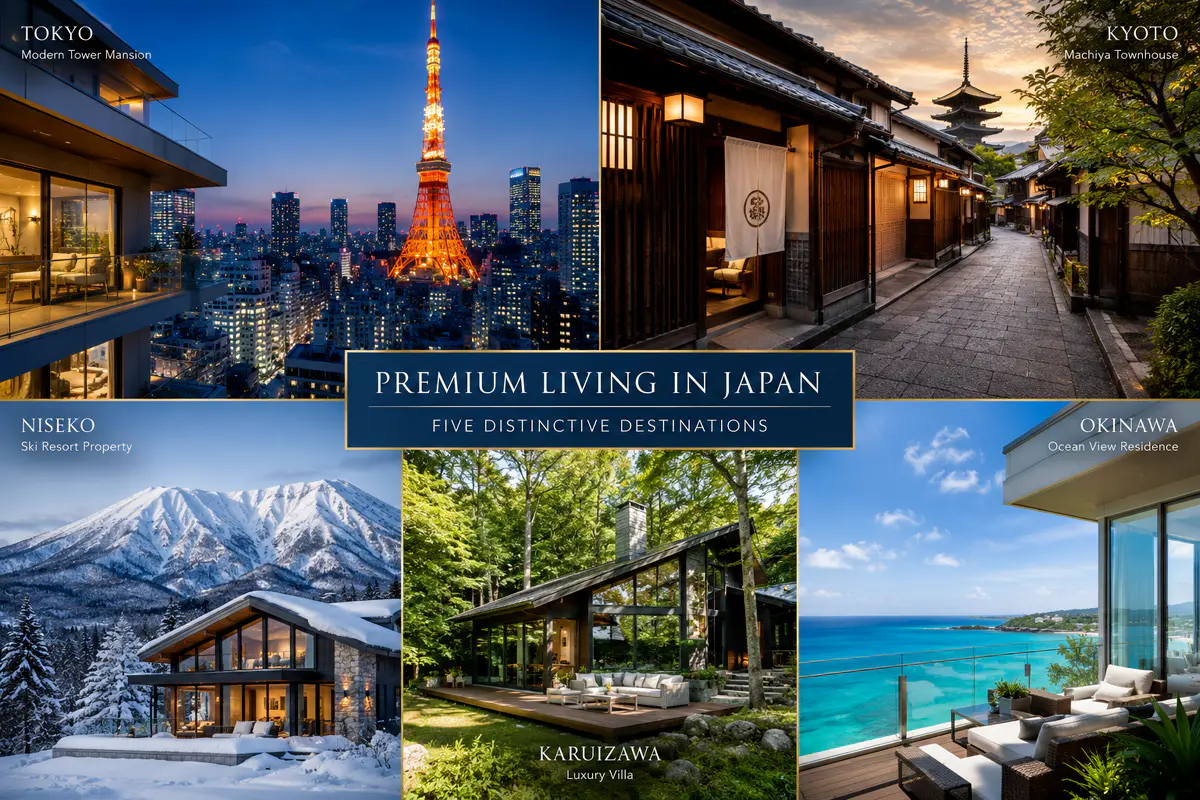
Tokyo | For Prospective Buyers Prioritizing Urban Luxury and Long-Term Value
Tokyo is the center of Japan’s premium property market. Prime areas such as Minato, Shibuya, Chiyoda, Chuo, and Shinjuku offer a wide selection of high-end condominiums, luxury tower residences, and detached homes in central locations.
One of Tokyo’s main strengths is its steady demand from both domestic and international prospective buyers and renters. With major business, education, healthcare, and transportation hubs concentrated in the city, properties can be attractive not only for personal use but also for rental investment or resale potential.
According to Japan’s 2026 official land price survey, residential land values across Tokyo’s 23 wards rose by 9.0% year over year. All 23 wards recorded increases for the fifth consecutive year, with Minato Ward posting a particularly strong gain of 16.6%. Residential land prices in central Tokyo therefore continue to trend upward.
However, premium properties in sought-after neighborhoods come with high purchase prices, and their gross rental yields are often relatively low. When evaluating high-end homes in Tokyo, it is important to consider not only rental income but also long-term value, market liquidity, and the property’s potential ease of resale.
Learn more about real estate investment strategies in Tokyo
Kyoto | For Prospective Buyers Who Value History and Cultural Significance
Kyoto is known for its historic streetscapes and strong international reputation as a cultural destination. In addition to luxury condominiums, prospective buyers can consider machiya townhouses and traditional residences that are difficult to find elsewhere in Japan.
Premium properties in Kyoto are often valued not only as residential property but also for their cultural significance and scarcity. As a result, they may appeal to prospective buyers who prioritize long-term ownership, personal use, and future asset value over short-term returns.
However, renovations and changes in property use may be restricted in certain areas. When purchasing a machiya or another older property, prospective buyers should consider maintenance costs and confirm whether renovations or lodging operations are permitted. It is important to consult a real estate professional and review local ordinances and zoning regulations.
Review the key considerations when buying property in Kyoto
Niseko and Hakuba | For Prospective Buyers Considering Ski Resort Properties or Lodging Operations
Niseko and Hakuba are popular resort destinations among international skiers and long-term visitors. In recent years, overseas investors have considered resort villas and properties suitable for lodging operations, in addition to vacation homes for personal use.
In these areas, the outlook for tourism and accommodation demand is just as important as the appeal of the property itself. This makes them strong candidates for investors seeking to combine personal use with rental operations or benefit from inbound tourism demand.
According to Japan’s 2026 official land price survey, demand for vacation homes and condominiums in Hakuba Village was strong among wealthy domestic and international prospective buyers, with capital flowing into the area from both within Japan and overseas. Residential land prices in Hakuba rose by an average of 22.8%. Prospective buyers considering resort properties should therefore monitor not only tourism demand but also rising land values and changes in acquisition costs.
Compare the property markets of Niseko and Hakuba
Karuizawa | For Prospective Buyers Seeking a Vacation Home or Second Home
Karuizawa is one of Japan’s best-known vacation home destinations. Its convenient access from Tokyo makes it an attractive location for a summer retreat or second home.
Premium properties in Karuizawa are generally better suited to prospective buyers who prioritize personal use, long-term ownership, and lifestyle benefits rather than maximizing rental income. For those seeking a vacation home or detached residence surrounded by nature, it is a compelling option.
Okinawa | For Prospective Buyers Considering Beach Resorts and Luxury Villas
Okinawa is one of Japan’s leading beach resort destinations, known for its clear waters and warm climate. Interest has grown in luxury villas, ocean-view homes, and resort condominiums not only in Naha but also in areas such as Onna, Yomitan, Chatan, Miyakojima, and Ishigaki.
Premium properties in Okinawa may be used not only as a second home or vacation property but also as a resort investment supported by accommodation demand. In addition to domestic travelers, the region attracts international visitors, particularly from other parts of Asia, making it well suited to prospective buyers seeking a tropical resort lifestyle within Japan.
However, tourism demand, property management services, and regulations governing lodging operations vary by area. Coastal properties also require measures to protect against salt damage and regular maintenance, so prospective buyers should carefully review the property’s ongoing management arrangements before purchasing.
Read our guide to real estate investment in Okinawa
Osaka and Fukuoka | For Prospective Buyers Prioritizing Urban Convenience and Portfolio Diversification
Osaka and Fukuoka are attractive options for prospective buyers considering premium properties outside Tokyo. Both cities offer well-developed transportation networks and commercial infrastructure, along with convenient urban living and potential rental demand.
As the economic center of the Kansai region, Osaka attracts demand from both business travelers and tourists. Fukuoka, meanwhile, benefits from its proximity to other parts of Asia and may appeal to prospective buyers who value the city’s growth potential and quality of life.
Compared with Tokyo, however, these cities may offer fewer premium properties and less information tailored to international investors. Prospective buyers should review the likely tenant profile, competing listings in the area, and the scope of services offered by local property management companies. It is also important to evaluate Osaka and Fukuoka on their own merits rather than applying the same assumptions used for Tokyo.
Read our guide to real estate investment in Osaka
Read our guide to real estate investment in Fukuoka
What to Check Before Buying Luxury Homes in Japan
When buying premium properties in Japan, it is important to consider more than the purchase price. Prospective buyers should also account for transaction costs, ongoing expenses, exchange-rate fluctuations, and how the property will be managed after closing. Below are the main points to review before making a purchase.
Calculate the Total Purchase Cost and Ongoing Expenses
In addition to the property price, prospective buyers must pay various transaction costs, including brokerage fees, registration expenses, taxes, and insurance premiums. Condominium owners must also budget for monthly management fees and reserve fund contributions for future repairs. For detached homes and vacation properties, ongoing expenses may include building repairs, landscaping, and grounds maintenance.
Because premium properties have higher purchase prices, their transaction and maintenance costs also tend to be substantial. Before buying, create a financial plan that covers not only the initial acquisition costs but also the expenses you can expect throughout the ownership period.
Learn about real estate taxes and property ownership costs in Japan
Review Currency Transfers and Exchange-Rate Risk
Overseas investors purchasing real estate in Japan will need to convert funds from their home currency into Japanese yen. Because exchange-rate fluctuations can affect the actual purchase cost, prospective buyers should review not only the property price but also the transfer method, remittance fees, and the time required for funds to arrive.
The amount of yen required may also change between the signing of the contract and the final closing date. To avoid a funding shortfall, confirm the total purchase amount in advance and allow an adequate financial buffer.
Confirm the Scope of Rental and Property Management Services
When buying high-end homes in Japan, it is important to establish how the property will be managed after purchase, whether or not you plan to rent it out. Even for condominiums in major cities, tenant demand varies depending on factors such as distance from the nearest station, floor plan, building age, and the surrounding neighborhood. Vacation homes and resort properties may also require cleaning, repairs, and regular inspections during periods when they are not in use.
For owners living overseas, handling tenant requests and arranging repairs directly is often impractical. Before purchasing, confirm which services a property management company can provide, including rental management, cleaning, maintenance, rent collection, and tenant communication.
How to Buy Premium Properties in Japan
Below is an overview of the basic process for overseas prospective buyers purchasing premium properties in Japan.
| Step | What It Involves | What Investors Living Overseas Should Prepare or Confirm |
|---|---|---|
| 1. Define your purchase goals | Clarify whether the property will be used as a primary residence, vacation home, rental investment, or long-term holding. | Determine how often you plan to use the property, how it will be operated, how long you expect to hold it, and whether you may sell it in the future. |
| 2. Narrow down the location and property type | Compare potential locations such as Tokyo, Kyoto, Niseko, Karuizawa, and Okinawa, as well as property types such as high-end condominiums, detached homes, and resort properties. | Compare ease of management, rental demand, competing listings in the area, and the availability of property management companies. |
| 3. Confirm your budget and transfer method | Calculate the total purchase cost, including the property price, transaction expenses, taxes, and ongoing costs. | Estimate brokerage fees, registration expenses, taxes, management fees, reserve fund contributions, and other related costs. |
| 4. Complete the contract, closing, and registration | Once you find a suitable property, sign the purchase agreement and proceed with closing and the registration of the ownership transfer. | Confirm the required identification documents, accepted signing methods, remittance schedule, and whether a representative can act on your behalf. |
| 5. Arrange post-purchase management and operations | After the property is transferred, arrange for property management, rental operations, and tax payments. | Decide how management fees and fixed asset tax will be paid and appoint service providers for repairs, rental management, cleaning, and communication with tenants or guests. |
The necessary preparations will vary depending on your intended use and the type of property you plan to purchase. However, reviewing your financing plan, contract and closing procedures, and post-purchase management arrangements in advance can make it easier to own and manage the property while based overseas.
Frequently Asked Questions About Luxury Homes in Japan
Below are answers to common questions about popular locations and whether foreign nationals can purchase high-end homes in Japan.
Where Do Billionaires Live in Japan?
Areas commonly chosen by affluent residents include Tokyo’s Minato, Shibuya, Chiyoda, Meguro, and Setagaya wards. Important factors often include access to central Tokyo, everyday convenience, the quality of local education and healthcare, privacy, and long-term property value.
However, an area’s popularity among wealthy residents does not necessarily mean it is right for your specific goals. It is important to compare property types and ownership strategies based on whether you are buying a primary residence, vacation home, or rental investment.
Can a Foreigner Buy Houses in Japan?
Yes. Foreign nationals can purchase homes and other real estate in Japan. Property purchases are not uniformly restricted solely on the basis of nationality or country of residence.
However, property owners living outside Japan should prepare in advance by confirming the required identification documents, how funds will be transferred, how the contract and closing will be handled, how taxes will be paid, and how the property will be managed after purchase.
Purchasing property does not automatically grant the purchaser a Japanese visa, residency status, or permanent residence. Those considering a future move or an extended stay should review the relevant immigration requirements separately from the real estate purchase.
Conclusion
High-end homes for sale in Japan range from upscale homes in Tokyo and traditional residences in Kyoto to resort properties in Niseko, Hakuba, and Karuizawa. Overseas prospective buyers should consider their purchase goals, long-term value, rental demand, and property management arrangements—not just the price or features.
Japan Property features real estate listings from across the country. Explore the available properties to find one that matches your preferences and investment goals.