
Can Foreigners Buy Land in Japan? Ownership, Process, and Key Considerations
Aug 1, 2026
Foreign buyers may wonder whether they can purchase and own land in Japan. Those living overseas may also want to know whether they can buy property without residing in Japan and what procedures are involved.
Before purchasing land in Japan, it is important to understand the type of ownership, the buying process, and the management and tax obligations that follow.
This guide explains whether foreigners can own land in Japan, along with the purchasing process, costs, and key considerations.
Browse properties for sale in Japan
Can Foreigners Buy Land in Japan?
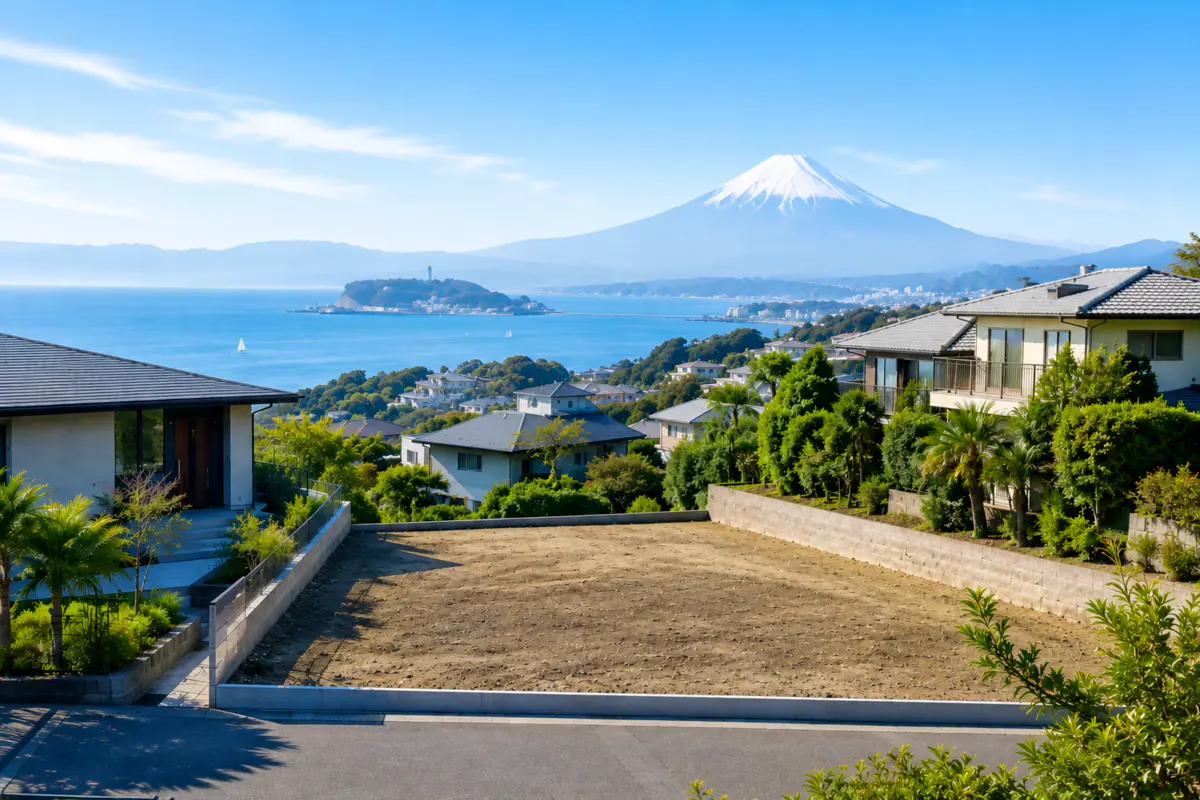
In Japan, there are currently no nationwide laws that prohibit foreigners from buying land based solely on their nationality. In principle, foreign buyers can purchase and own land under the same legal conditions as Japanese citizens.
That said, some transactions involving land located within designated Special Monitoring Areas—such as those surrounding defense facilities or remote border islands—may require advance notification before a purchase contract is signed. Japan is also continuing to review regulations related to the acquisition and use of land considered important to national security, so it is a good idea to check the latest requirements before buying.
How you can use a property depends on the characteristics and legal restrictions of the individual parcel. If you plan to build a home or other structure, be sure to confirm the zoning designation, building coverage ratio, floor area ratio, and road access. Agricultural and forest land are subject to different regulations than standard residential lots, so consult a real estate professional or other qualified expert before making a purchase.
Can Foreigners Buy Land in Japan Without Living There?
Yes. You do not need to be a resident of Japan to buy land.
However, overseas buyers may need to prepare additional documentation and complete procedures that do not typically apply to residents of Japan. These may include identity verification, proof of address, a signature certificate, transferring purchase funds from overseas, and coordinating with a judicial scrivener who handles the property registration process.
If you plan to complete the purchase without traveling to Japan, it is helpful to work with a real estate agency and a judicial scrivener that can support remote transactions and provide services in English.
Can Foreigners Own Land in Japan?
Yes. Foreigners can obtain full ownership (freehold title) to land in Japan.
Ownership gives you the legal right to own the land itself, making it possible to sell, inherit, or hold it as a long-term asset. This differs from a land lease right, which allows you to use land owned by someone else without owning the land itself.
Does Buying Property in Japan Allow You to Live There?
Buying land or other real estate in Japan does not automatically qualify you for a visa or residence status. Property ownership and the legal right to live in Japan are handled under separate systems.
If you plan to relocate to Japan in the future, you will need to obtain an appropriate status of residence—such as a work visa or a Business Manager visa—separately from the property purchase process.
Read our guide to property ownership and visas in Japan.
Can I Buy Land in Japan Without a Japanese Bank Account?
Yes. Even without a Japanese bank account, you may be able to buy land in Japan with cash by transferring the funds from an overseas account. However, you should confirm the transfer method, processing time, exchange rate, and fees in advance.
Financing may be more difficult. Lenders may require a Japanese bank account, an eligible status of residence, proof of income, and other documentation. Therefore, it is important to determine how you will fund the purchase early in the process.
How to Buy Land in Japan as a Foreigner
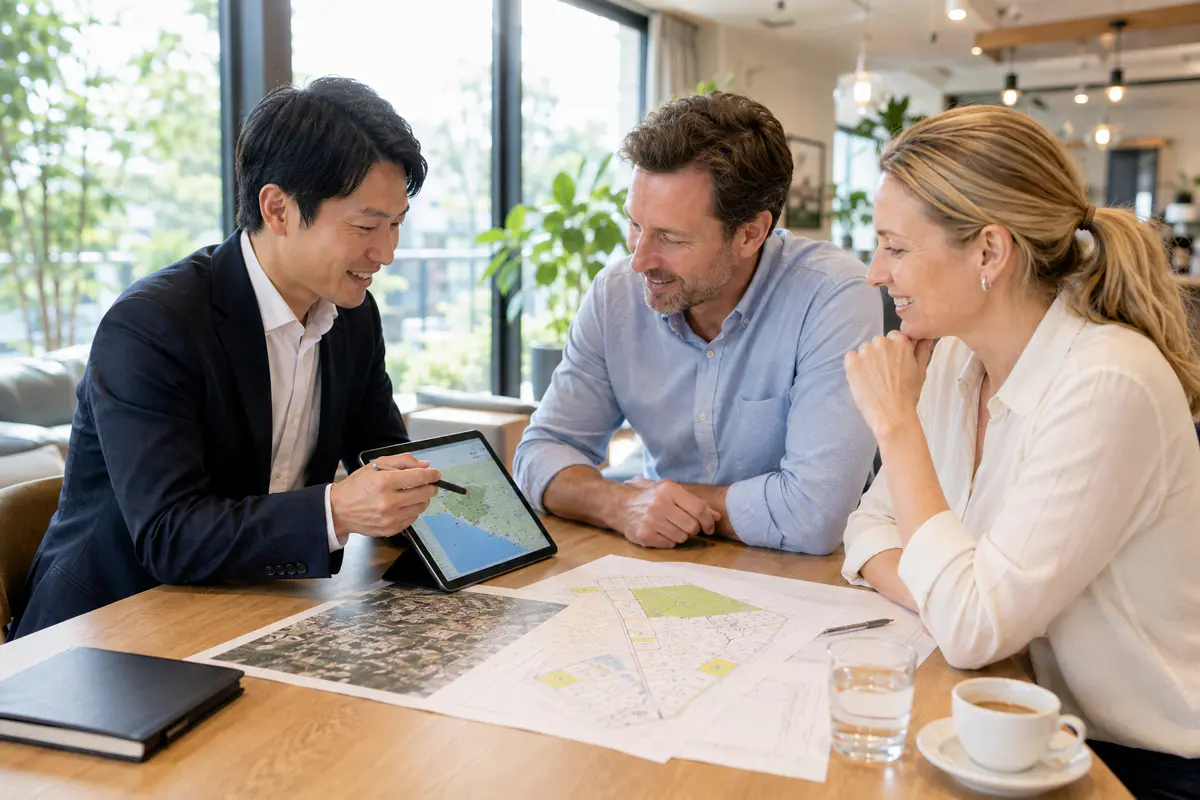
Buying land in Japan typically involves setting your goals and budget, checking the property conditions, consulting a real estate company, signing the contract, and completing payment and registration.
Overseas buyers may also need to prepare additional documents and arrange an international funds transfer, so it is helpful to have an understanding of how to buy land in Japan before you begin the process.
1. Define Your Purpose and Budget
First, decide how you plan to use the land, such as for a home, vacation property, rental investment, development, or long-term holding.
If you plan to build, confirm that construction is permitted. For investment purposes, also consider local demand, access, and future resale value.
Your budget should include taxes, registration costs, brokerage fees, and professional fees. Overseas buyers should also account for international transfer fees and exchange rate fluctuations when converting foreign currency into Japanese yen.
2. Check the Area and Land Conditions
Next, compare locations and review the conditions of each property. Prices, demand, and potential uses vary among cities, regional areas, and resort destinations.
In addition to price and lot size, check the zoning designation, building coverage ratio, floor area ratio, road access, and availability of utilities. Depending on these conditions, you may not be able to construct the type of building you want.
Agricultural land generally cannot be purchased or transferred without approval under Japan’s Agricultural Land Act. Forestland, vacation-home sites, and land in snowy regions can be purchased, but may require additional checks related to development restrictions, maintenance, snow removal, and vegetation management. Overseas buyers should also consider whether they can arrange reliable local property management.
3. Consult a Real Estate Company
Once you have narrowed down the area and land requirements, consult a real estate company. Overseas buyers may find the process easier by working with an agency that offers multilingual support, online communication, and experience assisting non-residents.
Share your budget, preferred area, intended use, travel availability, and plans for managing the property after purchase. Clear requirements will help the agent recommend suitable properties.
Learn how to find a real estate company or agent in Japan that offers English or Chinese support.
4. Submit an Offer and Sign the Contract
After choosing a property, submit a purchase offer and negotiate the price, closing date, and other terms.
Before signing the contract, you will receive an explanation of important matters covering ownership rights, legal restrictions, road access, utilities, and contract conditions. These checks are especially important when purchasing land, as they may affect how the property can be used.
Overseas buyers who cannot obtain a Japanese seal registration certificate may need to provide a signature certificate or notarized document instead. Requirements vary depending on the transaction, so confirm the necessary documents with the real estate company and judicial scrivener in advance.
Document preparation may take time, so begin the process well before the contract signing and closing dates.
5. Complete Payment and Registration
After signing the purchase agreement, pay the remaining purchase price and complete the ownership transfer registration. Closing costs may include registration fees, judicial scrivener fees, taxes, and brokerage fees.
Overseas buyers should arrange international transfers and required documents early, as transfer schedules, exchange rate fluctuations, and document preparation may affect the closing date. The signature certificate prepared for the contract may also be required for registration.
Once the ownership transfer is registered, the buyer becomes the legal owner of the land. Foreign nationals can own land in Japan, so the property can be held as an asset after registration.
6. Complete Post-Purchase Procedures
After registration, overseas buyers and non-residents should check whether two additional procedures are required.
The first is the appointment of a tax representative in Japan. Non-resident property owners generally appoint an individual or company in Japan to handle property tax payments and submit the required notification to the local government. A real estate company or tax accountant may be able to serve in this role. A tax representative may also be required for income tax filings if the land is later rented out.
The second is a post-transaction report under Japan’s Foreign Exchange and Foreign Trade Act. In some cases, non-residents who acquire real estate in Japan must submit a report to the Minister of Finance through the Bank of Japan. Exemptions may apply, including certain purchases for personal residence, so confirm the requirements with your judicial scrivener or real estate company.
Key Considerations Before Buying Land in Japan
When buying land in Japan, consider more than just the price and lot size. It is important to confirm that the land can be used as intended after purchase. For overseas buyers in particular, visiting the site and managing the property may be difficult, so review the land conditions and local property management options in advance.
| Check Item | What to Check |
|---|---|
| Can you build on the land? | Confirm the zoning designation, building coverage ratio, floor area ratio, and road access. Depending on these conditions, you may not be able to construct the type of building you want. Construction is generally restricted in Urbanization Control Areas. |
| Are there any issues with road access or property boundaries? | Confirm that the land meets Japan's road access requirement under the Building Standards Act (at least 2 meters of frontage on a road at least 4 meters wide) and that the property boundaries have been clearly established. Failure to meet these requirements may affect future construction or resale. |
| Are utilities available? | Check whether water, sewer, electricity, and gas services are available. If they are not, additional installation costs may be incurred after purchase. |
| Is the land classified as agricultural or forest land? | Agricultural land generally cannot be purchased or transferred without approval under Japan's Agricultural Land Act, making acquisition difficult in practice for overseas buyers who are not engaged in farming. Forest land and vacation-home sites may also require additional checks related to development restrictions, snow removal, and vegetation management. |
| Is the land located in an area requiring prior notification? | Land transactions exceeding a certain size in designated Special Monitoring Areas—such as areas surrounding defense facilities or remote border islands—may require prior notification under Japan's Act on the Review and Regulation of the Use of Real Estate Surrounding Important Facilities and on Remote Territorial Islands. This requirement applies regardless of nationality, but it is advisable to confirm whether the property is located within a designated area before purchasing. |
| Can the property be managed after purchase? |
If you live overseas, maintaining the land yourself may be difficult. Confirm that a local company or property management service can manage it on your behalf. For overseas owners, professional property management can also help coordinate regular inspections, maintenance, tax notices, communication with neighbors, and local administrative matters. Choosing a reliable management company before purchasing can make long-term ownership significantly easier. |
The points to check depend on how you plan to use the land. Consult a real estate company or relevant specialist before making a purchase.
Costs and Taxes When Buying Land in Japan
In addition to the purchase price, buying land in Japan involves various fees and taxes. Overseas buyers should also budget for international transfer fees, foreign exchange costs, and ongoing taxes after purchase.
| Cost or Tax | What to Check |
|---|---|
| Brokerage Fee | This fee applies when purchasing land through a real estate company. For properties priced above JPY 4 million, the maximum fee is generally calculated as purchase price × 3% + JPY 60,000 + consumption tax. |
| Registration and License Tax | This national tax is charged when registering the transfer of ownership. For land purchases, the standard rate is generally 2.0% of the assessed value for fixed asset tax purposes. A reduced rate may apply during certain periods, so check the latest applicable rate before purchasing. |
| Judicial Scrivener Fees | These are professional fees paid to a judicial scrivener for handling the registration process. Fees typically range from several tens of thousands of yen to over JPY 100,000. Buyers living overseas may also need to prepare a signature certificate issued by a Japanese embassy or consulate, or documents notarized by a local notary public. |
| Real Estate Acquisition Tax | This is a local tax charged once after the land is acquired. When the reduced rate for residential land applies, a general estimate is assessed value for fixed asset tax purposes × 1/2 × 3%. The tax notice is usually sent some time after the purchase, so budget for this expense in advance. |
| Fixed Asset Tax and City Planning Tax | These taxes are charged annually while you own the land. Fixed asset tax is generally calculated at a standard rate of 1.4% of the assessed value, while city planning tax may apply to land located in urbanization areas at a rate of up to 0.3%. Vacant land may not qualify for the tax reductions available to residential land, resulting in a relatively higher tax burden. Owners living overseas may also need to appoint a tax representative in Japan. |
| Stamp Duty | This tax is paid by attaching a revenue stamp to the purchase agreement. The amount depends on the contract value. For example, for a contract valued at more than JPY 10 million and up to JPY 50 million, the reduced stamp duty is JPY 10,000. |
| Transfer and Currency Exchange Costs | When transferring purchase funds from a foreign currency into Japanese yen, bank transfer fees and exchange-rate spreads may apply. Because exchange-rate fluctuations can affect the actual purchase cost, the timing of the transfer should also be considered. |
| Post-Purchase Management Costs | Ongoing costs may arise from grass cutting, snow removal, boundary maintenance, and dealing with neighboring properties or local issues. |
Learn more about the costs of buying property in Japan as a foreign buyer.

Conclusion
Foreign nationals can purchase land in Japan and obtain full ownership. However, it is important to confirm not only that the land can be purchased, but also that it can be used as intended.
Overseas buyers should review the land conditions, required documents, taxes, and post-purchase procedures in advance.
Japan Property provides real estate information for international buyers and investors. Compare locations and property conditions to find land or investment property that meets your needs.