
Tokyo Real Estate Investment Strategy for 2026: Key Traits and What Defines Luxury Properties
May 2, 2026
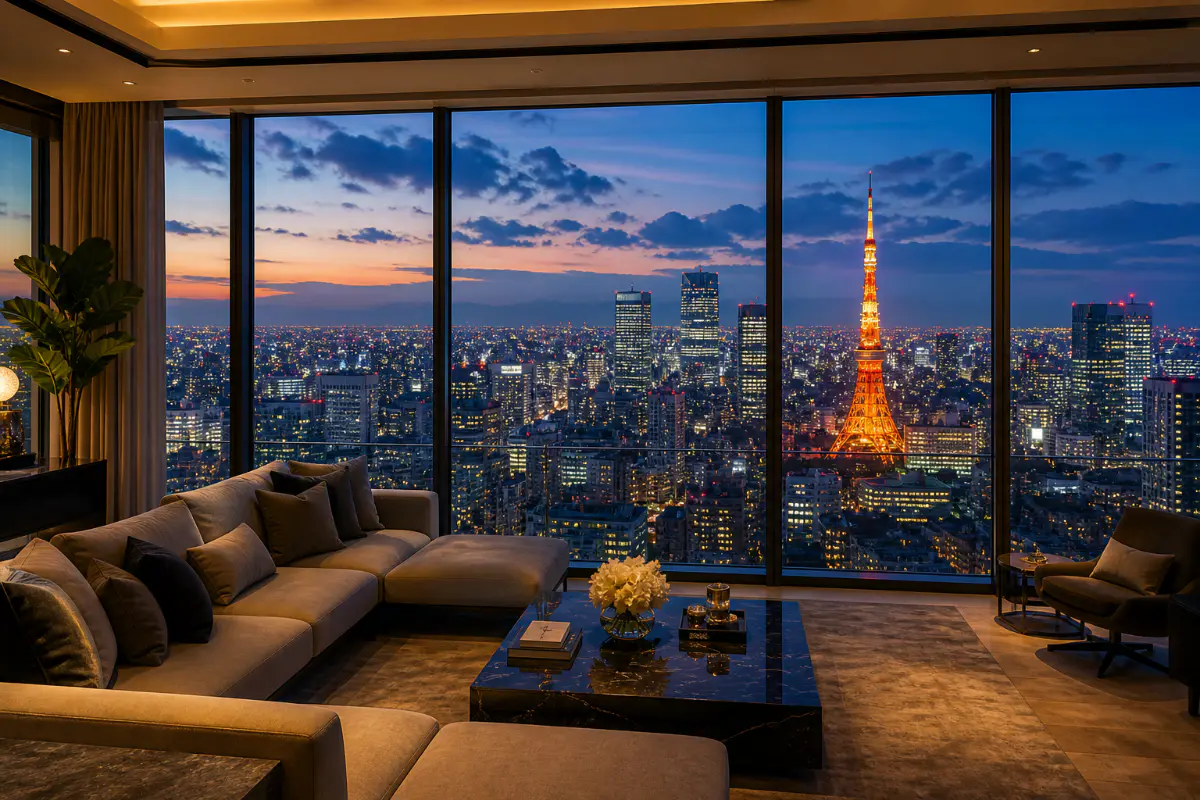
In the Tokyo real estate market—particularly the high-end segment—investment value extends far beyond traditional metrics like location or building age. Because transaction volume is limited within the luxury tier, factors such as scarcity, management quality, and panoramic views play a much larger role in determining long-term asset value.
For those considering foreign investment in Japan real estate, the prestige of a central Tokyo address and structural durability are critical evaluation criteria. Investors must also weigh pricing levels, yields, taxation, and liquidity to build a successful portfolio.
Compared to global hubs like New York or London, Tokyo luxury real estate has gained significant traction for its unique balance of relative affordability and investor-friendly tax structures.
This article breaks down the defining characteristics of luxury real estate Tokyo that appeal to high-net-worth individuals. We also incorporate the latest Tokyo luxury real estate news, global market comparisons, and practical insights for maximizing your investment returns.
Browse properties for sale in Tokyo
Why Tokyo Luxury Real Estate Operates Differently
In Tokyo real estate, the luxury segment follows a fundamentally different pricing logic than the broader residential market. In the general market, prices are largely driven by owner-occupiers and influenced by basic utility.
In contrast, Tokyo luxury real estate is shaped by a distinct buyer profile and specific investment objectives. This makes it difficult to assess value based on average price benchmarks alone. Instead, value is dictated by high-end variables: rare locations, developer branding, premium property management, and unobstructed views.
A Wealth-Driven Asset Class
Luxury real estate Tokyo is often acquired as a strategic vehicle for wealth preservation and global portfolio diversification rather than just a primary residence. This is a key driver for foreign investment in Japan real estate, as international buyers use Tokyo properties to hedge against volatility and gain exposure to yen-denominated assets.
As a result, these investors prioritize long-term stability over short-term speculation, positioning Tokyo as a low-volatility haven compared to other global capitals.
Why Averages Don’t Reflect True Value
Because transaction volume in the luxury tier is limited and price disparities between individual units are vast, general market benchmarks are often unreliable. Each asset must be appraised based on its unique “X-factor.”
However, comparing Tokyo’s pricing with other global cities remains an essential reference point for international buyers, a topic frequently highlighted in Tokyo luxury real estate news.
Price Comparison with Major Global Cities (Reference)
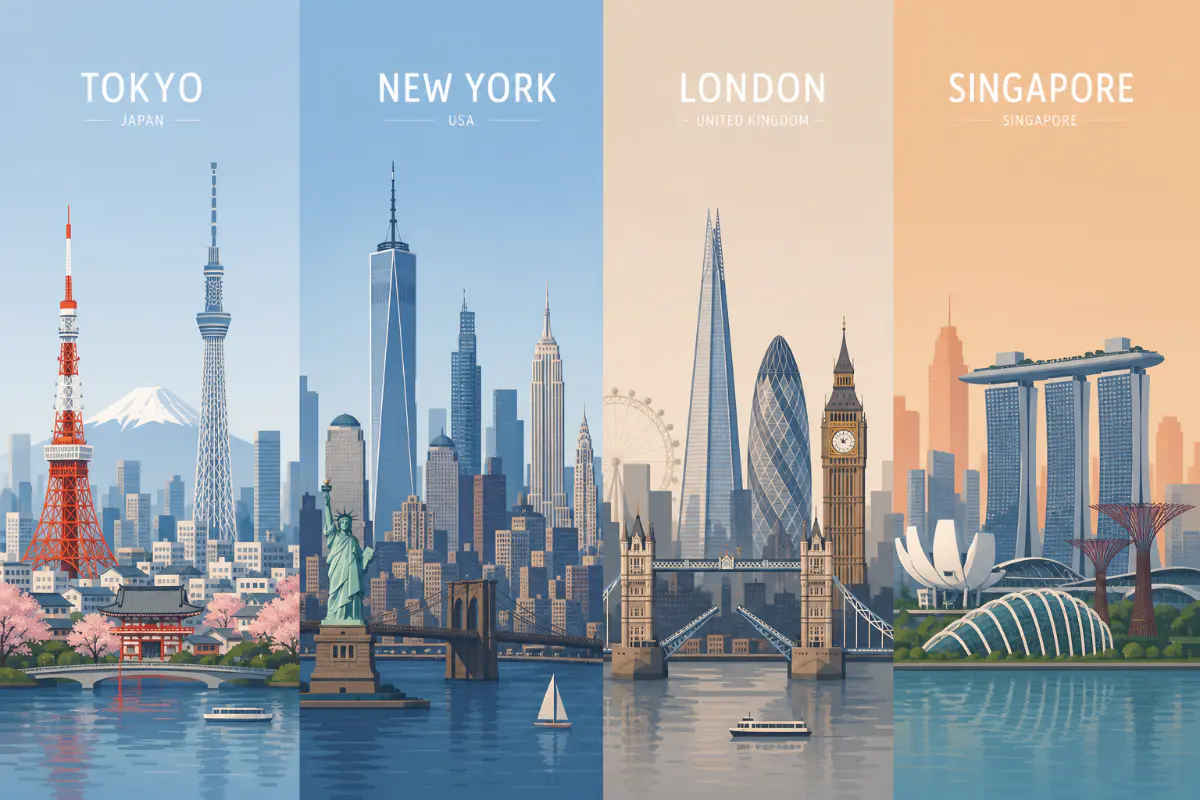
Global Comparison: Prime Residential Pricing (2026 Estimates)
| City | Average Price per m² (USD) |
|---|---|
| New York | $28,000–$45,000 per m² |
| London | $20,000–$40,000 per m² |
| Singapore | $24,000–$35,000 per m² |
| Tokyo | $15,000–$30,000 per m² |
Key Characteristics of Tokyo vs. Global Cities
Tokyo is increasingly viewed as a “capital preservation” market supported by a stable economic foundation. Global investors often position Tokyo real estate as a destination where long-term value is maintained, rather than a market prone to high-risk, short-term price spikes.
This perception has solidified the role of Tokyo luxury real estate as a stable anchor in global portfolios, as noted in recent Tokyo luxury real estate news.
Ownership Rules and Tax Advantages
Unlike Singapore, where foreign buyers may face additional stamp duties of up to 60%, Japan imposes no special restrictions on foreign investment in Japan real estate. Overseas investors can acquire property under the same legal conditions as domestic buyers.
Additionally, Japan’s property-related taxes—including fixed asset and city planning taxes—typically range between 1.4% and 1.7%. These structural advantages make Tokyo one of the most transparent and accessible markets for international capital.
Read more about Japan real estate investment tips
Rental Yields in the Luxury Segment
In the Tokyo luxury real estate market, annual rental yields generally hover between 3% and 4%. This outperforms luxury yields in New York and London, which often sit closer to 2% or 3%.
With consistent demand from high-earning expatriates and corporate leases in central wards, luxury real estate Tokyo remains a compelling option for those seeking stable, income-generating assets.
Shifting Investment Dynamics
The luxury segment of the Tokyo real estate market is currently undergoing a strategic evolution. These shifts do not signal a decline in appeal; rather, they reflect a maturing market where investor criteria are becoming more sophisticated.
- Evolving Investment Strategies
Historically, Tokyo was valued primarily for its stable rental yields. However, property prices in central Tokyo have recently begun outfacing rental growth.
As a result, investor priorities are shifting from a pure “income play” toward a balanced strategy that targets both capital appreciation and long-term asset preservation. This trend mirrors the dynamics of Singapore and New York, further integrating luxury real estate Tokyo into the global investment conversation.
- Adapting to a New Interest Rate Environment
After years of an ultra-low interest rate environment, Japan is gradually transitioning into a phase of rising rates. Consequently, investors are now placing higher premiums on asset resilience and location scarcity to ensure their Tokyo luxury real estate holdings can withstand changing borrowing costs.
- Narrowing Price Gaps
While Tokyo has long been considered “undervalued,” the price per square meter in central wards is steadily approaching international benchmarks. Despite this, the lack of foreign ownership restrictions and Japan’s political stability ensure that Tokyo luxury real estate remains a top-tier destination for foreign investment in Japan real estate.
Prime Criteria for High-Net-Worth Investors
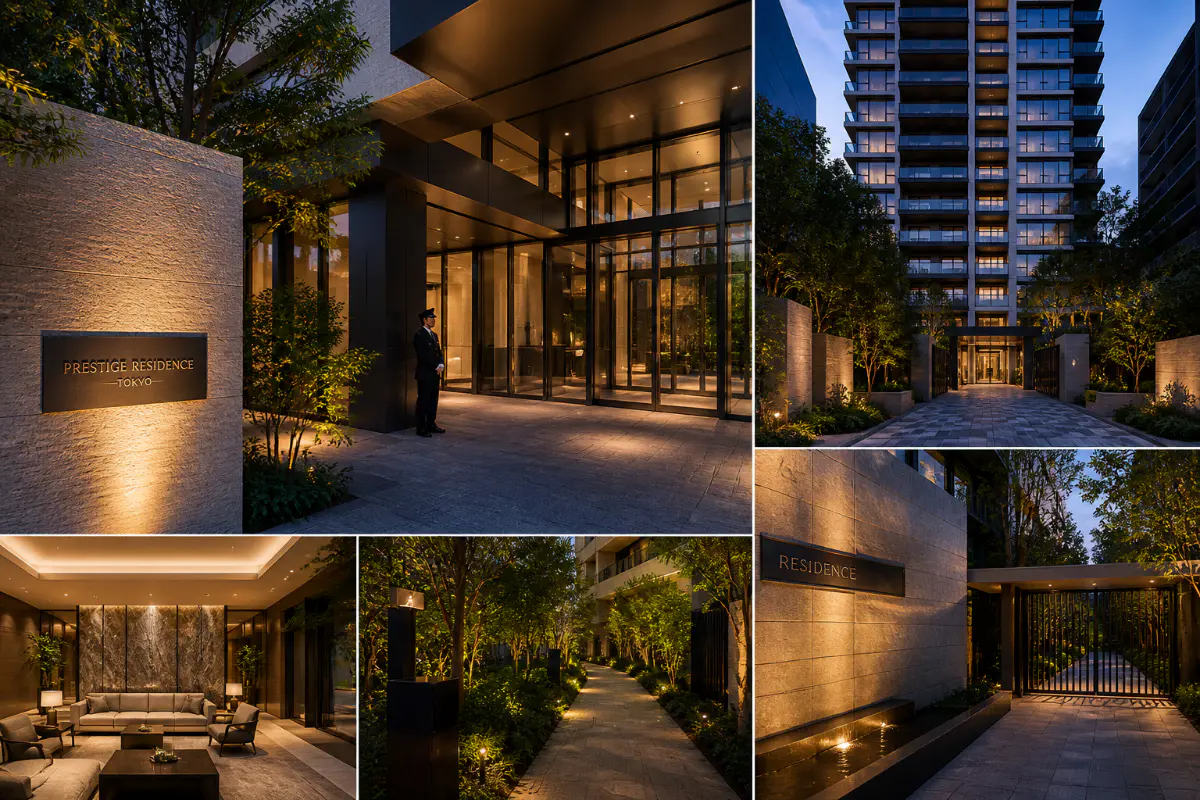
Central wards such as Minato, Shibuya, and Chiyoda remain the “Gold Standard” of Tokyo real estate. These districts host global corporate headquarters and luxury amenities, ensuring perpetual demand.
However, in the luxury segment, location is just the starting point. High-net-worth investors focus on:
- Property Management: High-touch service and maintenance.
- Privacy & Security: Discreet entrances and advanced systems.
- Unobstructed Views: Protection against future neighboring developments.
- Building Specs: Architectural significance and high-end finishes.
These elements directly impact resale liquidity and market competitiveness—factors frequently analyzed in Tokyo luxury real estate news.
Conclusion
While Tokyo was once defined by its low entry points and high yields, the modern market requires a more nuanced approach. Today, successful investment in Tokyo real estate demands a focus on asset resilience and scarcity. By prioritizing these luxury traits, investors can secure long-term stability and growth in one of the world’s most reliable metropolitan centers.