
Living in Okinawa: Main Island vs. Outer Islands, Costs & Lifestyle
Oct 23, 2026
Considering living in Okinawa but wondering whether the main island or an outlying island would suit you better? You may also be curious about how the cost of living in Okinawa compares with Tokyo.
Okinawa is known for its warm climate and abundant natural beauty, but transportation, healthcare, shopping, housing costs, and other aspects of daily life can vary significantly by area.
This guide covers the pros and cons of living in Okinawa, the differences between the main island and outlying islands, what each area is like, how living and housing costs compare with Tokyo, and what foreign residents should check before moving.
Browse properties for sale in Okinawa on Japan Property
Pros and Cons of Living in Okinawa
Living in Okinawa offers many benefits, including a warm climate and abundant natural beauty. At the same time, there are practical considerations to keep in mind, such as reliance on cars, typhoons, and the hot, humid weather.
Learn more about the Okinawa real estate market
Pros of Living in Okinawa
Some of the main advantages of living in Okinawa include:
- A warm climate throughout most of the year
- Easy access to the ocean and nature
- A generally more relaxed pace of life than in major urban areas
- In some areas, a balance between natural surroundings and everyday convenience
Okinawa stays relatively warm throughout much of the year, and one of its biggest draws is the opportunity to live close to the ocean and nature. Beaches and outdoor spaces are easy to enjoy as part of everyday life, not just on weekends, making Okinawa especially appealing to people who enjoy outdoor activities and water sports.
Living conditions also vary considerably across Okinawa. Some areas offer a greater concentration of urban amenities, while others provide a quieter environment surrounded by nature. This variety makes it easier to choose an area that suits your preferred lifestyle.
Cons of Living in Okinawa
Before moving to Okinawa, it is also important to consider the following:
- A car is necessary or highly convenient in many areas
- Typhoons can disrupt transportation and deliveries
- The hot, humid climate requires measures to prevent moisture and mold
- Shipping can take longer because Okinawa is geographically separated from mainland Japan
- Access to healthcare, shopping, and other services varies by area
Outside areas such as central Naha, daily life is generally easier with a private vehicle. This means the cost of buying and maintaining a car should be considered in addition to housing expenses when estimating the cost of living in Okinawa.
When typhoons approach, flights and ferry services may be canceled, which can affect deliveries as well as everyday routines. During periods of high heat and humidity, regular ventilation and dehumidification are also important for preventing mold.
These factors vary depending on whether you live on Okinawa’s main island or one of the smaller islands, as well as on the specific area within the main island.
Comparing Life on Okinawa’s Main Island and Outlying Islands
If you are considering moving to Okinawa, it is important to understand that daily life can differ significantly between the main island and the outlying islands. The main island generally offers easier access to transportation, healthcare, and shopping, while the smaller islands provide closer access to nature and a quieter living environment.
First, here is a comparison of the key differences.
| Category | Okinawa Main Island | Outlying Islands |
|---|---|---|
| Everyday convenience | More shopping facilities and medical services, making daily life relatively convenient | Varies by island, and options may be limited in some areas |
| Transportation | Public transportation is relatively accessible in and around Naha | Daily travel tends to rely more heavily on cars |
| Healthcare | More options for general hospitals and specialist care | Medical facilities and specialties may be limited |
| Shopping | More large shopping centers and supermarkets | Stores tend to be concentrated in urban areas, with options varying by location |
| Employment | A relatively wider range of industries and job opportunities | Employment tends to be concentrated in certain industries, such as tourism and hospitality |
| Housing | A relatively wider selection of both rental and for-sale properties | Rental housing supply may be limited on some islands |
| Shipping and deliveries | Deliveries may take longer than in mainland Japan | More vulnerable to disruptions from canceled ferry and air services |
| Access to mainland Japan | Naha Airport provides convenient connections to destinations across Japan | Direct flight availability and frequency vary by island |
| Natural environment | Ranges from urban areas to regions rich in nature | Easier access to the ocean and natural surroundings |
| Best suited for | Those looking to balance everyday convenience with an Okinawan lifestyle | Those who prioritize nature and a distinctive island lifestyle |
However, living conditions also vary on Okinawa’s main island, particularly between the southern, central, and northern regions. Likewise, life on Ishigaki, Miyako, and Kume islands differs from one island to another. The following sections take a closer look at each area.
Living on Okinawa’s Main Island: What Each Area Is Like
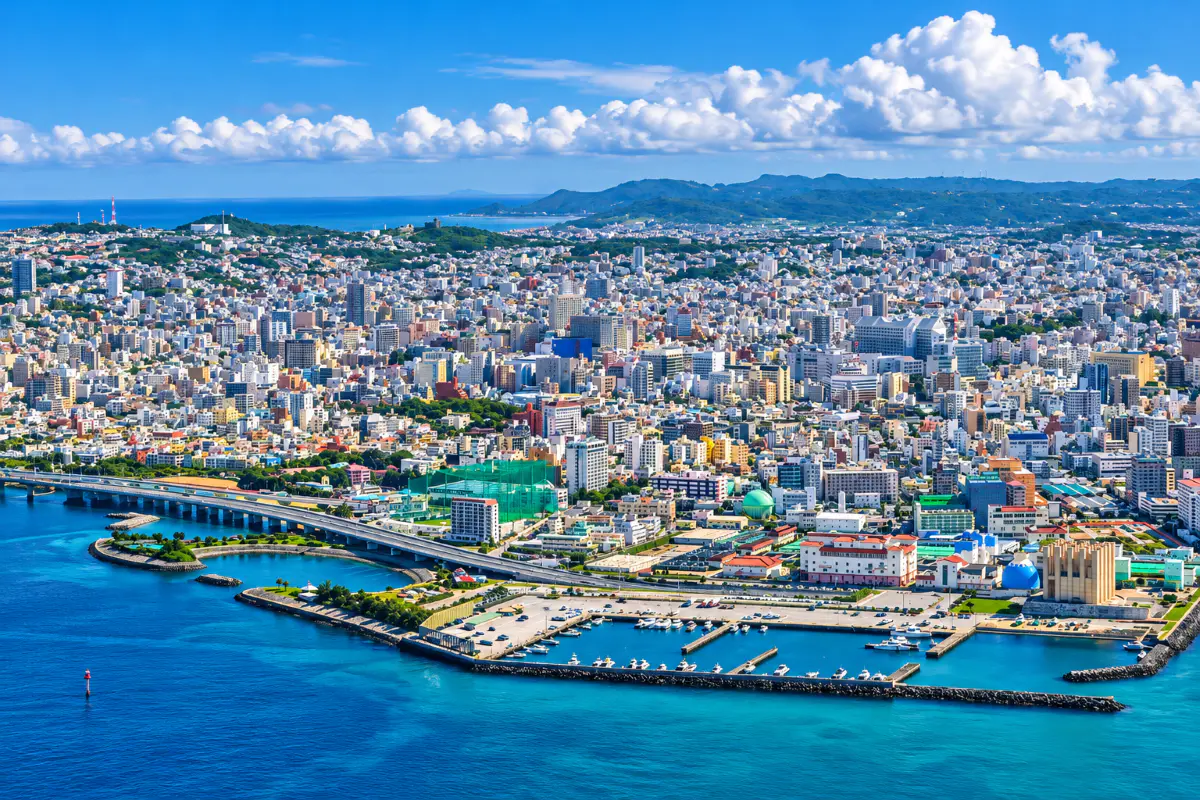
Living conditions on Okinawa’s main island vary considerably between the southern, central, and northern regions. The south is a good option for those who prioritize urban convenience, while central Okinawa offers a balance of everyday amenities and the island’s distinctive coastal environment. The north is better suited to those who want to live closer to nature.
Southern Okinawa: Naha and Tomigusuku
Naha has a high concentration of shopping facilities, medical institutions, and other urban amenities, making it one of the most convenient places to live on Okinawa’s main island. The Yui Rail monorail runs from Naha Airport through the city, making it easier to get around without relying entirely on a car.
Neighboring Tomigusuku is also close to Naha Airport, about a 15-minute drive away. It is well suited to people who value easy access to Naha and everyday convenience.
Explore Naha’s neighborhoods and residential areas
Central Okinawa: Chatan, Yomitan, and Okinawa City
Central Okinawa offers relatively easy access to both urban amenities and coastal and natural areas. Chatan is home to shopping and leisure destinations such as Mihama American Village, and the area is also known for streetscapes influenced by American culture.
Okinawa City is a transportation hub in the central part of the island, with a range of shopping and everyday services. Yomitan Village, by contrast, offers a quieter residential environment and may appeal to those looking for a balance between convenience and nature. In central Okinawa, however, daily life generally revolves around having a car.
Northern Okinawa: Nago and Onna
Northern Okinawa has more natural surroundings than the southern and central regions and may appeal to those looking for a quieter lifestyle. Nago is the main urban center in the north, with commercial, medical, and educational facilities that provide a certain level of convenience while still allowing residents to stay close to nature.
Onna, located along the west coast, is known for its many resort properties and easy access to the ocean. However, public transportation alone may not be sufficient for everyday life in much of northern Okinawa, so having a car is generally more convenient. Nago is about a 90-minute drive from Naha Airport via the expressway.
Living on Okinawa’s Outlying Islands: Three Popular Options
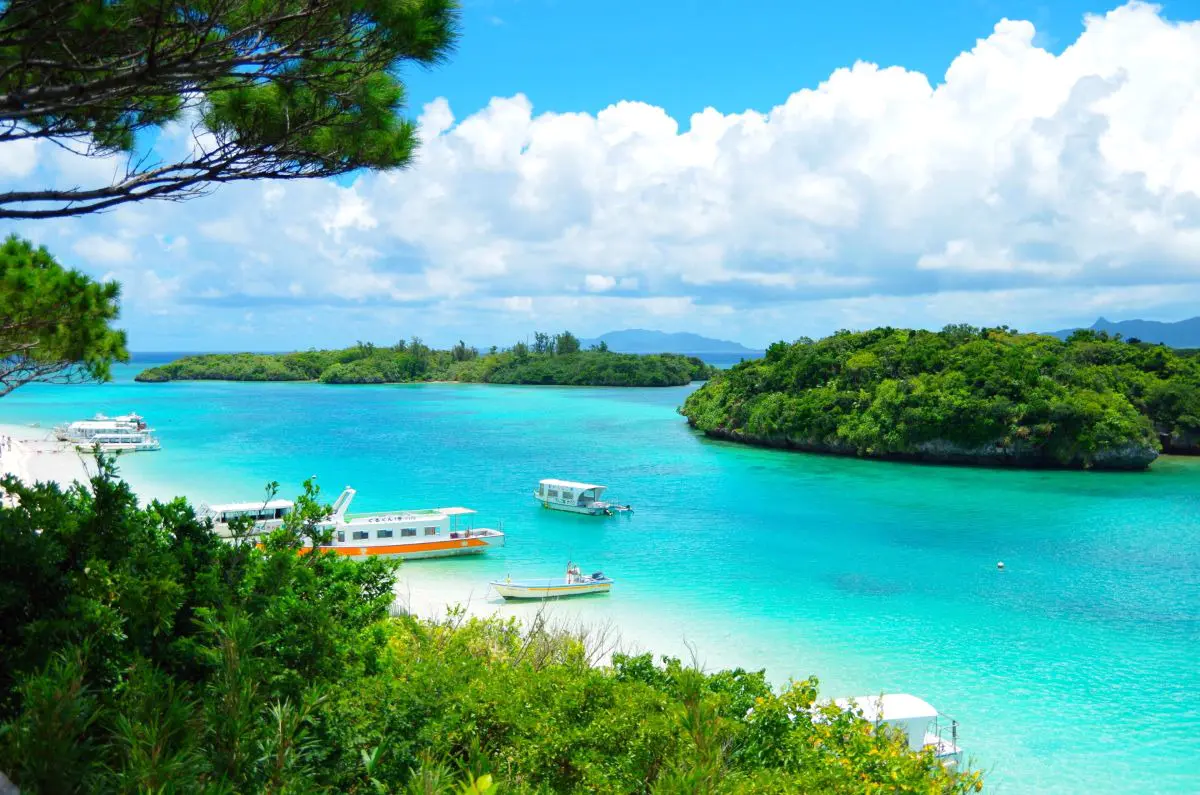
Okinawa has many outlying islands, but living conditions and access to mainland Japan vary considerably from one island to another. Here, we look at Ishigaki, Miyako, and Kume islands, three options commonly considered by people planning a move to Okinawa.
Comparing Life on Ishigaki, Miyako, and Kume Islands
Ishigaki, Miyako, and Kume are all well-known destinations for people relocating within Okinawa, but they differ in population, healthcare services, housing conditions, and access to mainland Japan. Before deciding where to live, it is helpful to compare the characteristics of all three islands.
| Category | Ishigaki Island | Miyako Island | Kume Island |
|---|---|---|---|
| Population | Approx. 50,000 | Approx. 53,000 | Approx. 7,300 |
| Access from Naha | Approx. 55 minutes by air, with frequent flights | Approx. 45–50 minutes by air, with frequent flights | Approx. 30–35 minutes by air or 3.5 hours by ferry |
| Healthcare | Okinawa Prefectural Yaeyama Hospital (general hospital) | Okinawa Prefectural Miyako Hospital (general hospital) | Kumejima Public Hospital (general hospital and a key provider of remote-island medical care) |
| Shopping and everyday convenience | A good selection of supermarkets and drugstores in the urban area | Everyday services are concentrated in the urban area, but getting around generally requires a car | Fewer stores, which also tend to be smaller |
| Housing | Rental housing supply may be limited | Rental housing shortage and persistently high rents are local issues | Support includes a vacant-home bank and renovation subsidies of up to ¥500,000 |
| Relocation support | Relocation consultation services and a vacant-home bank are available | Relocation and settlement consultation services are available | Relocation consultation services and subsidies to promote the use of vacant homes are available |
| Best suited for | Those looking to balance island living with a certain level of convenience | Those who want to enjoy beautiful beaches and driving around the island | Those seeking a quiet, more local island lifestyle |
Sources:
Population: Okinawa Prefecture population estimates for the Miyako and Yaeyama regions (2025); Kumejima Tourism Association data (as of July 2024)
Healthcare facilities: Okinawa Prefecture, “Medical Facilities and Allocation of Physicians by Island”
Housing and relocation support: Publicly available information on relocation and vacant-home programs provided by each municipality
Ishigaki Island
Ishigaki is the main hub of the Yaeyama Islands, and its urban area has supermarkets, medical facilities, and other services needed for daily life. Ishigaki City also provides information and support for people considering relocation or long-term residence, including relocation consultation services and a vacant-home bank.
One of Ishigaki’s main advantages is that it offers close access to nature while still providing a relatively convenient living environment for an outlying island. It may be a good fit for those interested in island life who also value a certain level of everyday convenience.
Miyako Island
Miyako Island offers the opportunity to live close to beautiful beaches and the ocean, while essential urban services are concentrated in its main developed areas. Miyakojima City has also been working to improve public transportation between areas such as the city center and Miyako Airport, although having a car is still convenient for everyday travel.
Because some parts of the island are affected by resort development and tourism demand, those considering a move should also check housing availability and local rental prices in advance.
Kume Island
Kume Island is smaller than Ishigaki and Miyako and may appeal to those looking for a quieter, more local island lifestyle. The town provides a relocation guide covering housing, employment, education, healthcare, transportation, and other aspects of daily life, as well as a consultation service for prospective residents.
At the same time, shopping and healthcare options are more limited than on Okinawa’s main island or the larger outlying islands. Before moving, it is important to consider not only the natural environment but also access to essential services and available transportation.
Cost of Living in Okinawa
Housing costs in Okinawa are generally lower than in Tokyo, but other expenses, including food, utilities, and car ownership, can be higher. When estimating the cost of living in Okinawa, it is important to look beyond rent and consider factors such as where you live and whether you will need a car.
Estimated Monthly Living Expenses in Okinawa
Monthly living expenses in Okinawa vary depending on household size, location, and whether you own a car. Outside Naha in particular, a car is often necessary, so your budget should account for vehicle-related expenses in addition to rent and food.
| Expense | Single Person | Couple | Family of Three |
|---|---|---|---|
| Rent | ¥55,000–¥70,000 | ¥85,000–¥120,000 | ¥100,000–¥140,000 |
| Food | ¥40,000–¥50,000 | ¥70,000–¥85,000 | ¥80,000–¥100,000 |
| Utilities | ¥13,000–¥18,000 | ¥20,000–¥28,000 | ¥25,000–¥35,000 |
| Communications | ¥7,000–¥10,000 | ¥10,000–¥15,000 | ¥12,000–¥18,000 |
| Car and transportation | ¥20,000–¥35,000 | ¥25,000–¥40,000 | ¥30,000–¥50,000 |
| Other living expenses | ¥50,000–¥65,000 | ¥65,000–¥85,000 | ¥75,000–¥100,000 |
| Estimated monthly total | ¥185,000–¥250,000 | ¥275,000–¥375,000 | ¥320,000–¥445,000 |
Note: Rent figures are based on asking rents in Naha as of September 2026. Other expenses are estimates based on household spending by household size in Okinawa Prefecture from the Ministry of Internal Affairs and Communications’ 2024 National Survey of Family Income, Consumption and Wealth, adjusted to reflect recent price trends.
Note: The figures above are estimated monthly costs for households renting a home in or around Naha and, as a general assumption, owning and using one car per household. They do not include taxes, social insurance contributions, savings, vehicle purchase costs, private insurance premiums, moving expenses, or tuition for private or international schools. Actual living expenses will vary depending on location, housing conditions, the number of cars owned, children’s ages, and lifestyle.
Outside the Naha area, a car is often necessary for daily life, which means budgeting for fuel, auto insurance, mandatory vehicle inspections, parking, and other ownership costs. Because Okinawa remains warm and humid for much of the year, electricity costs for air conditioning and dehumidification should also be considered.
On the outlying islands, some groceries, household goods, and shipping fees may be higher than on the main island because of transportation costs by sea or air. Rental housing is also limited on islands such as Ishigaki and Miyako, so rents are not necessarily lower than on Okinawa’s main island. As a result, the actual cost of living on the smaller islands may exceed the estimates shown in the table.
Cost of Living in Okinawa vs. Tokyo
According to the Ministry of Internal Affairs and Communications’ Regional Difference Index of Consumer Prices, the overall 2024 index was 104.0 for Tokyo and 100.2 for Okinawa Prefecture, with the national average set at 100. Housing costs are particularly high in Tokyo, while price levels for food, utilities, and water are higher in Okinawa than in Tokyo.
| Category | Tokyo | Okinawa |
|---|---|---|
| Overall | 104.0 | 100.2 |
| Food | 103.0 | 106.7 |
| Housing | 127.2 | 94.0 |
| Utilities and water | 96.2 | 105.0 |
Note: National average = 100. Figures are 2024 annual averages based on the Ministry of Internal Affairs and Communications’ Retail Price Survey (Structural Survey).
In other words, while housing is generally more affordable in Okinawa than in Tokyo, food and utility costs can be higher. It is therefore not accurate to assume that living in Okinawa is always cheaper than living in Tokyo. Actual expenses depend on factors such as the area you choose and whether you need a car.
Compare living costs across Japan’s major cities
Housing Costs in Naha vs. Tokyo’s 23 Wards
Housing costs vary significantly depending on location and apartment size. The table below compares average rents in Naha with rental prices across Tokyo’s 23 wards by floor plan.
| Floor Plan | Tokyo’s 23 Wards | Naha |
|---|---|---|
| STUDIO | ¥65,000–¥162,000 | ¥58,500 |
| 1Bed | ¥123,000–¥270,000 | ¥112,500 |
| 2Beds | ¥164,000–¥400,000 | ¥120,000 |
Note: Figures are estimates based on rental listings as of September 2026. For Tokyo’s 23 wards, the range shown represents the lowest to highest average rent among the individual wards. Properties are generally limited to those built within the past 20 years. Management fees, parking fees, and other additional costs are not included.
Although rents vary widely across Tokyo’s 23 wards, many areas have higher average rents than Naha across all apartment sizes. The difference can be particularly significant for 1LDK and 2LDK units, meaning couples and families moving to Okinawa may be able to reduce their housing costs.
However, rents on Okinawa’s outlying islands are not necessarily lower than on the main island. In Miyakojima City, for example, a shortage of rental housing and persistently high rents have become local issues. In places such as Ishigaki City, the supply of rental properties may also be limited, making it difficult to find a home that matches your preferred size or other requirements.
For this reason, anyone considering living in Okinawa should look not only at rent but also at housing availability, parking costs, car ownership expenses, and other costs associated with their chosen area.
What Foreign Residents Should Check Before Moving to Okinawa

Foreign residents considering a move to Okinawa should look beyond location and living costs and also check factors such as language support, transportation, and access to healthcare. Because living conditions can differ significantly between the main island and the outlying islands, it is important to consider how these differences may affect your day-to-day life when planning a move.
Check English-Language Services and Everyday Support
Some parts of Okinawa have relatively large international communities, but that does not necessarily mean that you can manage daily life using English alone. Before choosing where to live, check whether English-language support is available at nearby medical facilities, local government offices, and stores and services you are likely to use regularly.
If you are moving with children, it is also important to research local education options, including international schools.
Find Out Whether You Will Need a Car
According to data from Okinawa Prefecture, there were 1.63 registered vehicles per household at the end of fiscal 2023, compared with a national average of 1.29. Monorail and bus services are available in and around Naha, but in many other parts of Okinawa, cars are used more frequently for everyday transportation.
Before moving, check not only the public transportation available in your chosen area but also the requirements for using your driver’s license in Japan and the costs of purchasing and maintaining a vehicle.
Consider a Short Stay Before Relocating
If possible, spend some time in your preferred area before making a final decision to move.
A short stay can help you assess practical factors that may be difficult to notice as a tourist, such as access to shopping and transportation, the surrounding environment, and the local climate. If you are considering one of Okinawa’s outlying islands, it is particularly important to check access to healthcare, delivery and logistics services, and transportation to Okinawa’s main island and mainland Japan.
Conclusion
Okinawa offers a warm climate and easy access to nature, but living conditions vary by area. Before moving, consider practical factors such as transportation, healthcare, housing costs, and access to everyday services.
If you are considering a long-term stay or relocating to Okinawa, explore available properties on Japan Property.
Looking for a property in Okinawa that meets your needs? Explore listings on Japan Property.