
Japanese School System by Age: Grades, School Year & Start Dates
Oct 22, 2026
The Japanese school system differs from those in the United States, the United Kingdom, and Australia in terms of when the school year begins and how grade levels are determined. In Japan, the new school year generally starts in April, so children transferring from overseas may find that their previous grade does not align exactly with their grade placement in Japan.
This article explains the relationship between age and grade level in the Japanese school system and compares it with those in other countries. For foreign families considering a move to Japan, it also covers the annual school calendar and key factors to consider when choosing where to live based on schooling needs.
Find rental and for-sale properties in Japan on Japan Property
Japanese School System: Ages and Grade Levels
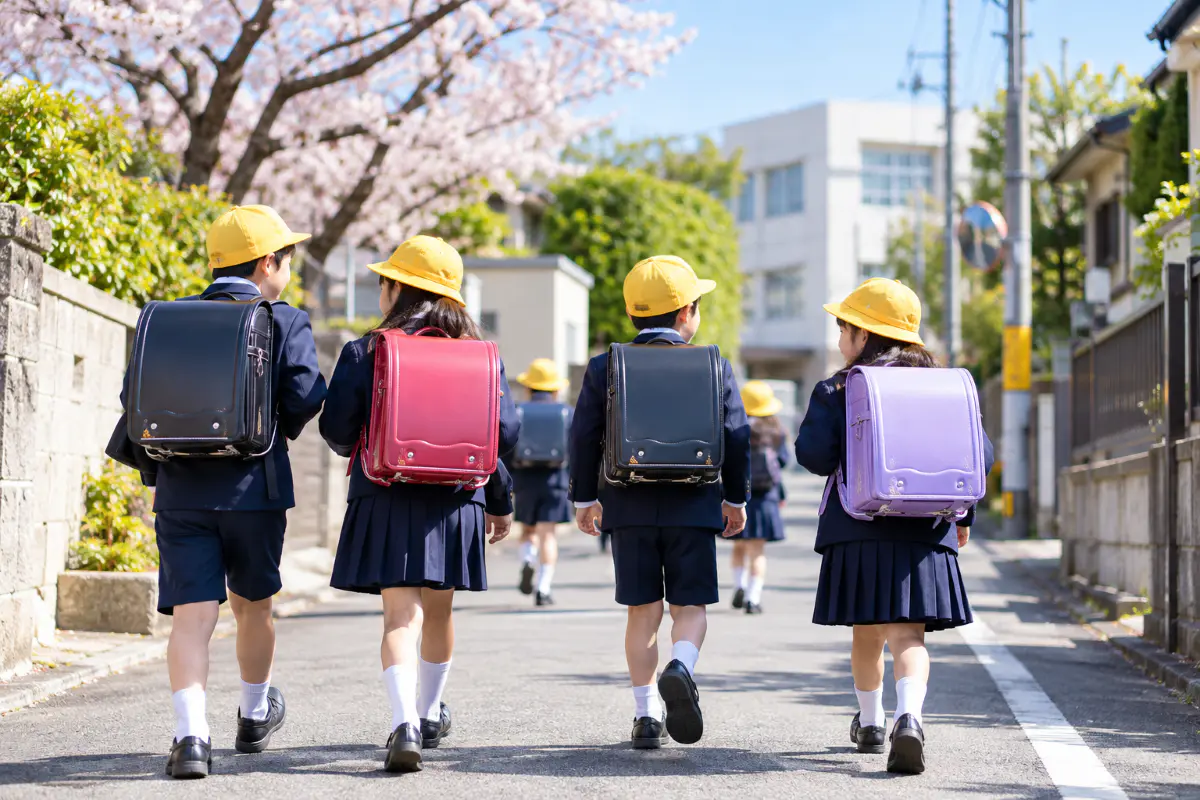
The Japanese school system consists of preschool education, including kindergarten, followed by elementary school, junior high school, high school, and university. Elementary school lasts six years and junior high school lasts three years, making these nine years compulsory education in Japan. Parents of foreign-national children are not legally required under Japanese law to enroll their children in school, but children may attend public elementary and junior high schools free of charge under the same conditions as Japanese children if their families wish to do so.
In Japan, a child's school entry and grade level are generally determined by age. The table below shows the typical age, stage of education, and grade level in the Japanese school system.
| Age | Education Level | Grade | Compulsory Education |
|---|---|---|---|
| Ages 3–5 | Kindergarten and other preschool programs | — | — |
| Ages 6–11 | Elementary school | Grades 1–6 | Yes |
| Ages 12–14 | Junior high school | Grades 7–9 | Yes |
| Ages 15–17 | High school | Grades 10–12 | — |
| Age 18+ | University and other higher education | — | — |
However, a child's actual grade is determined not only by age but also by date of birth. Children transferring from overseas may also find that their current grade does not correspond exactly to the grade they would enter in Japan. The following sections explain how grade placement works in more detail.
What Grade Is a Child in Japan? Comparing Grade Levels with Other Countries
School years begin at different times, and grade cutoffs vary from country to country. As a result, children of the same age may be placed in different grades in Japan and in the countries in which they currently live.
If you are planning to move to Japan from overseas, first check which Japanese grade generally corresponds to your child's age.
| Age | Japan | United States | England | Australia |
|---|---|---|---|---|
| Ages 5–6 | Kindergarten | Kindergarten | Year 1 | Prep / Foundation |
| Ages 6–7 | Elementary School, Grade 1 | Grade 1 | Year 2 | Year 1 |
| Ages 7–8 | Elementary School, Grade 2 | Grade 2 | Year 3 | Year 2 |
| Ages 8–9 | Elementary School, Grade 3 | Grade 3 | Year 4 | Year 3 |
| Ages 9–10 | Elementary School, Grade 4 | Grade 4 | Year 5 | Year 4 |
| Ages 10–11 | Elementary School, Grade 5 | Grade 5 | Year 6 | Year 5 |
| Ages 11–12 | Elementary School, Grade 6 | Grade 6 | Year 7 | Year 6 |
| Ages 12–13 | Junior High School, Grade 1 | Grade 7 | Year 8 | Year 7 |
| Ages 13–14 | Junior High School, Grade 2 | Grade 8 | Year 9 | Year 8 |
| Ages 14–15 | Junior High School, Grade 3 | Grade 9 | Year 10 | Year 9 |
| Ages 15–16 | High School, Grade 1 | Grade 10 | Year 11 | Year 10 |
| Ages 16–17 | High School, Grade 2 | Grade 11 | Year 12 | Year 11 |
| Ages 17–18 | High School, Grade 3 | Grade 12 | Year 13 | Year 12 |
Grade levels shown are general guidelines. School systems and grade classifications may vary by state or school district in the United States and Australia, and by region in the United Kingdom.
Grade Placement in Japan Is Determined by Date of Birth
In Japan, children born between April 2 of one year and April 1 of the following year are placed in the same grade. This is because the Japanese school year begins on April 1 and, under Japanese rules for calculating age, a person is considered to reach a given age on the day before their birthday.
As a result, even children born in the same calendar year may be placed one grade apart depending on their birthdays. For example, a child born on April 1, 2020, and a child born on April 2, 2020, would be in different grades in Japan.
| Example Date of Birth | Grade Placement |
|---|---|
| Born April 1, 2020 | Placed in the same grade as children born between April 2, 2019 and April 1, 2020 |
| Born April 2, 2020 | Placed in the same grade as children born between April 2, 2020 and April 1, 2021 |
When determining which grade your child would enter, it is therefore important to check the child's full date of birth rather than age alone. This is particularly important for families moving from overseas, as the child's current grade may not match the grade assigned under the Japanese system.
Grade Placement When Transferring from Overseas
When a child transfers from an overseas school to a school in Japan, they are generally placed in the grade corresponding to their age. However, because school-year calendars and curricula differ by country, the grade the child attended overseas may not correspond directly to the grade they would enter in Japan.
In some cases, factors such as Japanese-language ability and the child's previous schooling and academic progress may also be taken into account. For example, guidelines from Japan's Ministry of Education, Culture, Sports, Science and Technology state that a child may be placed in a different grade when appropriate based on factors such as Japanese proficiency and previous learning experience.
For transfers to a public elementary or junior high school, families generally first register their residence with the municipality where they live and then complete enrollment procedures with the local board of education or the municipal office responsible for school enrollment. The relevant authority will review the child's age and previous schooling, provide information about the school the child will attend, and the family will then complete the necessary transfer procedures with that school.
If your child may need support with classes taught in Japanese, it is also worth asking the municipality or school about available Japanese-language instruction, interpreting services, and other forms of assistance. Required documents, enrollment procedures, and support for foreign students vary by municipality, so if you already know where you will be living, contacting the local board of education in advance can help you prepare.
If you are considering a private school or international school instead, admission requirements and procedures vary by institution, so contact the school directly for details.
Main School Options for Foreign Families in Japan
For foreign children receiving an education in Japan, the main options are public schools, private schools, and international schools. These differ in terms of the language of instruction, admission requirements, costs, and relationship to the family's place of residence. The choice will depend on factors such as the child's Japanese proficiency, the family's educational priorities, and future academic plans.
The main differences are summarized below.
| Main Option | Key Features |
|---|---|
| Public elementary and junior high schools | The school a child attends is generally determined by their residential address. Classes are primarily taught in Japanese. Foreign-national children may attend public elementary and junior high schools without paying tuition if their families wish to enroll them. |
| Private schools | Entrance exams, admission requirements, tuition, and educational policies vary by school. Unlike public schools, enrollment is generally not restricted by the school district associated with the family's residential address. |
| International schools | Many provide instruction in English or another language other than Japanese. Curricula, accreditation, tuition, and admission requirements can vary significantly from one school to another. |
Public or private schools may be suitable for children who are comfortable studying in Japanese, while international schools may be a better fit for families that prioritize continuity with an overseas curriculum or an English-language learning environment. The most appropriate option will vary from family to family.
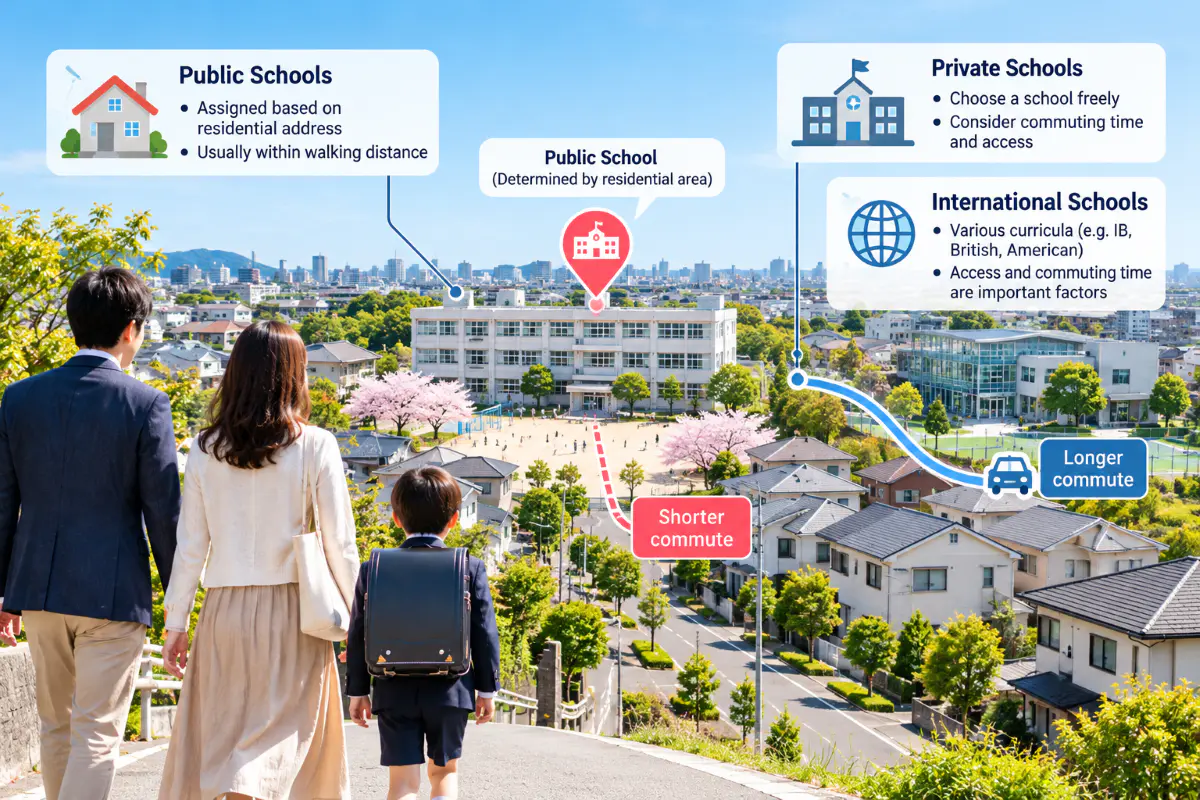
Your choice of school can also affect where you look for a home. For public schools, the school district is an important consideration, while commuting time and transportation access may matter more for private and international schools. It is therefore helpful to consider school choice and residential location together.
When Does School Start in Japan? The School Year and Annual Schedule
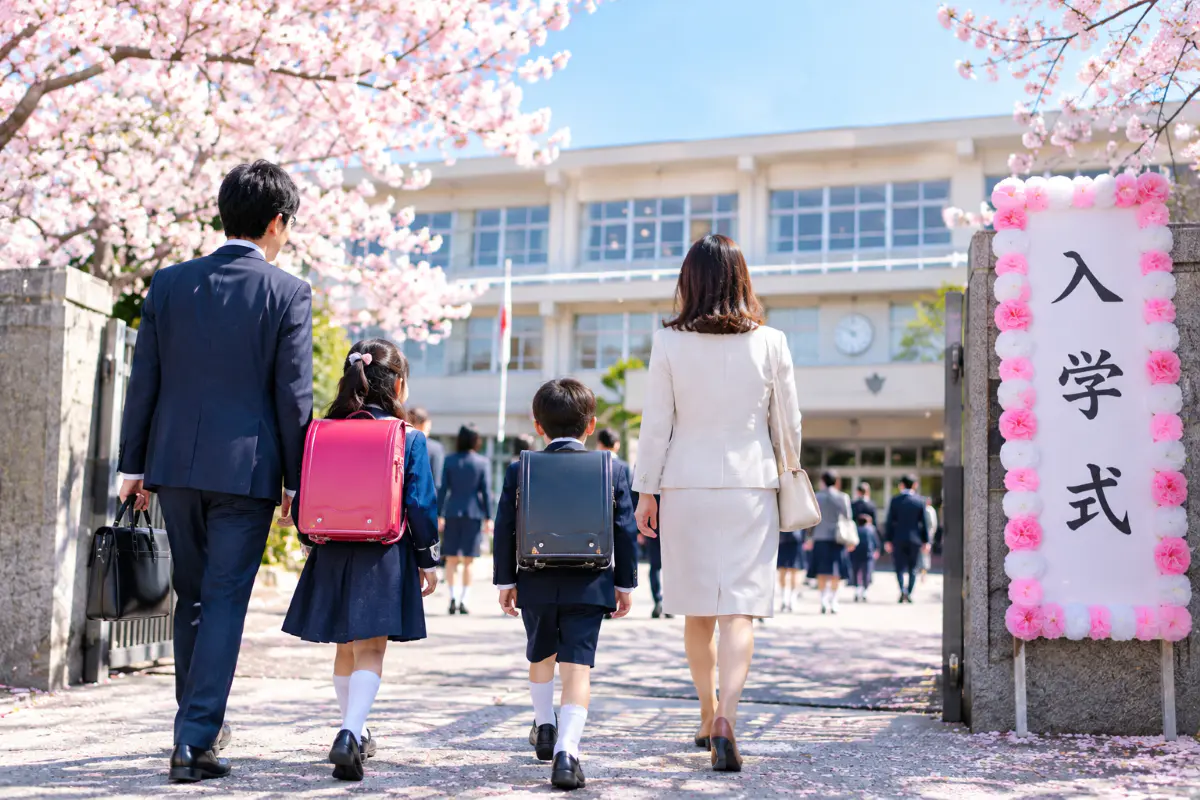
The school year in Japan generally begins in April and ends in March of the following year. In many parts of the United States and the England, the school year starts around September, while in much of Australia it begins around January. Families moving to Japan from overseas should therefore be aware that the academic calendars may not align.
For example, a family moving from a country with a September start during the summer may arrive just as a new school year is beginning back home, while the Japanese school year is already underway. When planning the timing of a child's transfer, it is helpful to understand the Japanese academic calendar and annual school schedule.
The School Year in Japan Generally Runs from April to March
In the Japanese school system, a new grade generally begins in April and ends the following March. Enrollment and promotion to the next grade typically take place in April, while graduation is usually held in March.
The way the school year is divided varies by school, but many schools use a three-term system. Some schools operate on a two-semester system instead, so exact term dates and vacation periods should be confirmed directly with the school.
Typical Annual School Schedule in Japan
Japanese schools generally have summer, winter, and spring breaks between terms. At schools using the common three-term system, the year typically follows a schedule similar to the one below.
| Period | Typical Schedule | |
|---|---|---|
| April | Start of the new school year and entrance ceremonies | |
| April–July | First term | |
| July–August | Summer vacation | |
| September–December | Second term | |
| December–January | Winter vacation | |
| January–March | Third term | |
| March | Graduation ceremonies, end-of-year ceremonies, and spring vacation |
Children transferring from overseas do not necessarily need to wait until the new school year begins in April. Enrollment or transfer during the school year may also be possible in some cases. However, term dates and extended school breaks vary by region and school, so once your moving schedule is set, it is advisable to check the calendar of the school you are considering.
Key Points for Foreign Families Choosing a School and Residential Area in Japan
When choosing a school for your child in Japan, the type of school will also affect how you approach your home search. For public schools in particular, your residential address is tied to the school district, while for private and international schools, factors such as commuting time and school bus service areas may be more important.
Rather than choosing a home first, it is helpful to identify your preferred school and commuting options before deciding which residential areas to consider.
Learn about the process of buying a home in Japan as a foreign buyer
If You Prefer a Public School, Check the School District Before Choosing a Property
At public elementary and junior high schools in Japan, the school a child attends is generally determined by their residential address. If you have a particular public school in mind, check its school district before choosing a property and focus your home search within that area.
For foreign families, it is also worth looking beyond school district boundaries and checking what Japanese-language instruction and academic support are available. According to a 2025 survey by Japan's Ministry of Education, Culture, Sports, Science and Technology, 73,313 foreign-national students in public schools required Japanese-language instruction, up from 57,718 in 2023 (※).
However, the type of support available, including methods of Japanese-language instruction and the availability of support staff, varies by municipality and school. If your child may have difficulty taking classes in Japanese, consider contacting the local board of education or schools in your preferred area while you are still searching for a property.
When considering a public school, it is important to compare residential areas not only based on which school your child can attend, but also on the educational support available in that community.
(※) Source: Ministry of Education, Culture, Sports, Science and Technology, “Results of the FY2025 Survey on the Acceptance of Students Requiring Japanese-Language Instruction”
For Private and International Schools, Choose an Area Based on the Commute
With private and international schools, a child's school is generally not determined by where the family lives, as is generally the case with public schools. Instead, daily commuting time, access to public transportation, and school bus service areas may become important factors when choosing where to live.
If you already have a preferred school, check its admission requirements and application schedule, then narrow down residential areas based on a realistic commuting distance.
Housing Priorities Vary by School Type
School choice and home selection should be considered together rather than separately. Depending on the type of school, the priorities for your property search may differ as follows.
| Preferred School Type | Key Points to Check When Choosing a Home |
|---|---|
| Public elementary and junior high schools | School district, municipality, and availability of Japanese-language support |
| Private schools | Commuting time, transportation access, and admission requirements |
| International schools | Commuting time, school bus service areas, and academic calendar |
It is also helpful to consider not only your child's commute, but also parents' travel to work, access to shopping, and other aspects of daily life. If you are planning to buy a home in Japan, narrowing down potential neighborhoods based on both the school and workplace locations can make the search more efficient.
Learn about the costs and procedures involved in buying a home in Japan
Conclusion
Under the Japanese school system, six years of elementary school and three years of junior high school are compulsory education, and the school year generally runs from April through March of the following year. Because grade placement depends on a child's date of birth as well as age, children moving to Japan from overseas may not enter the same grade they attended in their previous country.
Japan Property provides property listings and information to help foreign buyers navigate the process of purchasing real estate in Japan. When choosing an area or property for your family, consider factors such as your child's school, commuting access, and the surrounding area.
Find rental and for-sale properties in Japan on Japan Property