
What Is the Cost of Living in Japan? Comparing Tokyo, Major Cities, and Rental Costs
Sep 11, 2026
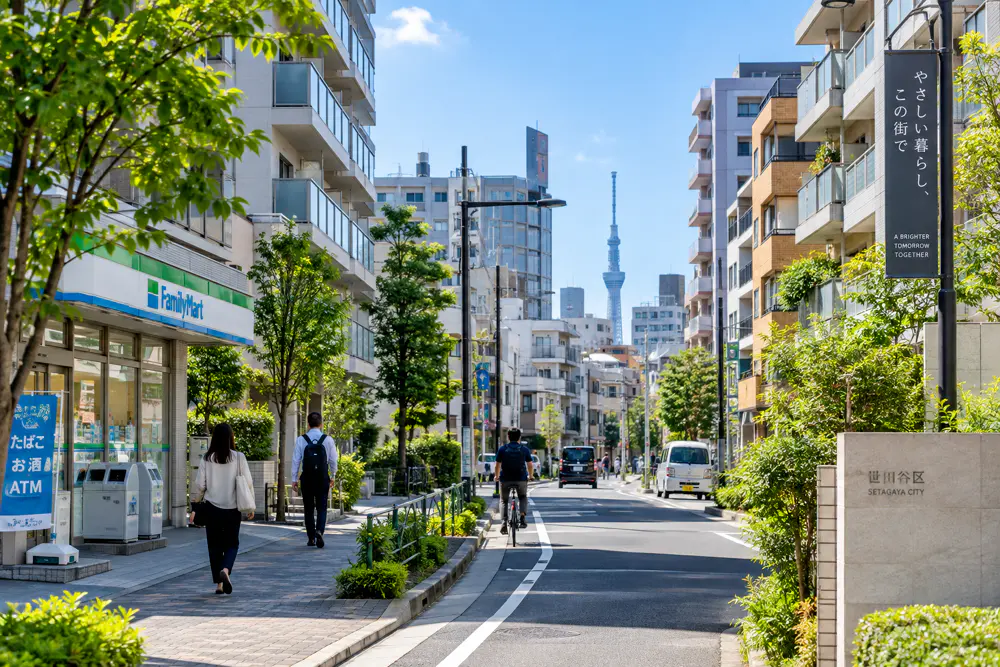
The cost of living in Japan is approximately ¥170,000–¥220,000 (about US$1,100–1,420) per month for a single person, and around ¥200,000–¥280,000 (about US$1,300–1,810) in Tokyo. Actual expenses vary depending on household size and housing needs, but these figures provide a general guide to monthly costs including rent, food, and utilities.
Tokyo was once regarded as one of the world’s most expensive cities. In recent years, however, a weaker yen has made its cost of living more affordable compared with cities such as New York, London, and Singapore. Within Japan, though, Tokyo remains one of the more expensive places to live.
When planning a budget, it is important to consider not only national averages but also differences between Tokyo and regional cities, as well as rent levels for the size of home you need.
This article explains typical monthly living expenses in Japan and Tokyo, including food and transportation costs, and compares major cities in Japan and overseas. It also covers average rents by apartment size in Tokyo, Osaka, Nagoya, and Fukuoka to help those considering living in Japan or buying property there.
※US dollar amounts in this article are approximate conversions based on an exchange rate of US$1 = ¥155 as of August 2026. Exchange rates fluctuate, so check the latest rate when planning your budget.
Explore Properties Available in Japan
What Is the Cost of Living Per Month in Japan and Tokyo?
The cost of living in Japan varies depending on household size, location, home size, and lifestyle. The table below provides a general estimate of the monthly budget needed to live in Japan overall and in Tokyo.
| Household Size | Estimated Monthly Budget in Japan | Estimated Monthly Budget in Tokyo | Main Factors Affecting Costs |
|---|---|---|---|
| Single person | ¥170,000–¥220,000 | ¥200,000–¥280,000 | Rent, dining out, location |
| Two-person household | ¥280,000–¥360,000 | ¥350,000–¥450,000 | Home size, location |
| Three- to four-person household | ¥320,000–¥450,000 | ¥420,000–¥600,000 | Housing, education, household size |
※These estimates include typical expenses such as rent, food, utilities, transportation and communications, healthcare, household goods, and entertainment.
The figures above are estimates based on average household consumption expenditures by household size from the 2025 Family Income and Expenditure Survey conducted by the Ministry of Internal Affairs and Communications (MIC), the government agency responsible for Japan’s official statistics. They also take into account typical rental housing costs and differences in rent levels between Tokyo and other parts of the country.
For example, as of May 2026, the average asking rent for apartments in Tokyo’s 23 wards was approximately ¥113,000 (about US$730) for units of 30 m² or less, ¥181,000 (about US$1,170) for units between 30 and 50 m², and ¥257,000 (about US$1,660) for units between 50 and 70 m². Because rent varies significantly by location and unit size, the total cost of living in Tokyo can also differ considerably.
On an annual basis, a reasonable estimate is approximately ¥2.5–4 million (about US$16,100–25,800) for a single person living in Tokyo, ¥4–6 million (about US$25,800–38,700) for a two-person household, and ¥5–8 million (about US$32,300–51,600) for a household of three to four people.
What Does the Cost of Living in Japan Include? Average Monthly Expenses by Category
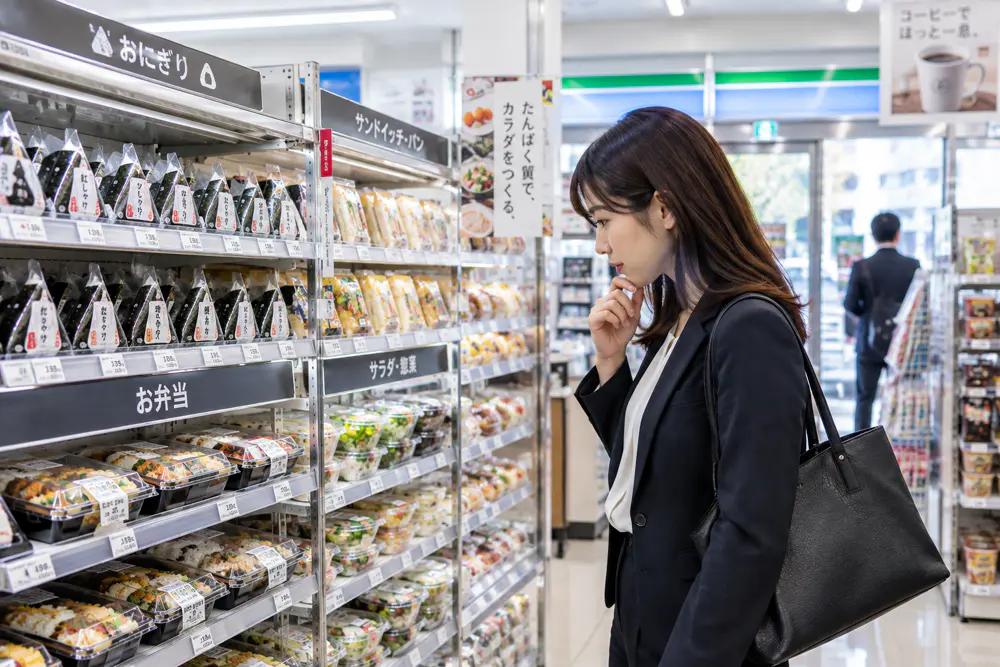
According to the Ministry of Internal Affairs and Communications’ 2025 Family Income and Expenditure Survey, average monthly spending by category for single-person households and households of two or more people is as follows.
| Expense Category | Single-Person Household | Households of Two or More | Main Factors Affecting Costs |
|---|---|---|---|
| Food | Approx. ¥49,000 | Approx. ¥95,000 | Household size, dining-out frequency, food choices |
| Housing | Approx. ¥22,000 | Approx. ¥19,000 | Renting vs. owning, location, home size |
| Utilities | Approx. ¥13,000 | Approx. ¥25,000 | Household size, season, home size |
| Furniture and household goods | Approx. ¥6,000 | Approx. ¥13,000 | Furniture and appliance purchases or replacements |
| Clothing and footwear | Approx. ¥5,000 | Approx. ¥10,000 | Purchase frequency, brands |
| Healthcare | Approx. ¥9,000 | Approx. ¥16,000 | Frequency of medical visits, insurance coverage |
| Transportation and communications | Approx. ¥19,000 | Approx. ¥46,000 | Commuting distance, car ownership, mobile and internet plans |
| Education | Approx. ¥40 | Approx. ¥12,000 | Whether there are children in the household, public vs. private education |
| Recreation and entertainment | Approx. ¥21,000 | Approx. ¥32,000 | Frequency of hobbies, travel, and leisure activities |
| Other consumer spending | Approx. ¥28,000 | Approx. ¥47,000 | Personal care, social expenses, and other services |
| Total | Approx. ¥173,000 | Approx. ¥314,000 | — |
※These are nationwide averages. For readability, each figure has been rounded to the nearest ¥1,000.
Food expenses vary depending on how often you cook at home versus eat out. Japan offers a wide range of options, including supermarkets, convenience stores, and restaurants. However, households that regularly purchase imported foods or international brands may spend more than the national average.
In major cities such as Tokyo and Osaka, it is possible to rely primarily on trains, subways, and buses and live without owning a car. In some regional areas, however, a car may be necessary, adding expenses such as fuel, parking, insurance, and taxes.
Communication costs generally include mobile phone service and home internet. A low-cost mobile plan from an MVNO typically costs around ¥2,000–¥3,500 per month, while plans from major carriers are generally around ¥6,000–¥8,000 per month. Fiber-optic home internet typically costs about ¥4,000 per month for an apartment and around ¥5,000–¥6,000 for a detached house. Initial administrative fees of about ¥3,000 and installation charges may also apply. Foreign residents should also note that identification documents, such as a residence card, may be required when signing up for these services in Japan.
Because the housing category in the Family Income and Expenditure Survey includes owner-occupied households, the figure shown in the table should not be interpreted as the current market rent for rental properties. Actual housing costs can vary significantly depending on the city, neighborhood, and size of the home.
How Much Do You Need to Earn to Live in Japan? Average Salary and Take-Home Pay
Living costs are only half the picture; it also helps to know how they compare with typical earnings in Japan. According to the National Tax Agency's 2025 Private Sector Salary Survey (covering the 2024 calendar year, published September 2025), the average annual salary among all private-sector employees who worked the full year was approximately ¥4.78 million (about US$30,800), a record high and the fourth consecutive annual increase. Among employees classified as full-time regular staff (seishain), the average was approximately ¥5.45 million (about US$35,200).
| Employment Type | Average Annual Salary (2024) | Approx. Monthly Take-Home Pay* |
|---|---|---|
| All employees (national average) | Approx. ¥4.78 million | Approx. ¥300,000–¥310,000 |
| Full-time regular employees (seishain) | Approx. ¥5.45 million | Approx. ¥340,000–¥350,000 |
*Take-home pay is an approximate figure after income tax, resident tax, health insurance, employees' pension, and employment insurance are deducted, based on a single filer with no dependents living in Tokyo. Actual deductions vary by age, family status, and municipality.
For context, a single person earning the national average salary and living in Tokyo would have a monthly take-home income of roughly ¥300,000–¥310,000, compared with an estimated monthly cost of living of ¥200,000–¥280,000 discussed earlier in this article.
This suggests that a single person earning an average salary can generally cover typical living costs in Tokyo, though the margin narrows considerably in more expensive neighborhoods or with higher rent. Those earning less than the national average, such as new graduates, part-time workers, or those in the early stages of relocating to Japan, may need to budget more carefully or consider areas outside central Tokyo.
Everyday Prices in Japan: A Quick Reference
Beyond the monthly budget totals above, it can help to know what individual everyday items typically cost. The following figures are drawn from the Ministry of Internal Affairs and Communications' Retail Price Survey and Tokyo Metropolitan Government price data.
- Bowl of ramen (eating out): Approximately ¥665 nationwide on average (as of January 2024). Tokyo prices tend to run somewhat higher than the national average.
- Curry rice at a restaurant (Tokyo): Approximately ¥700–¥750.
- Coffee at a café (Tokyo, excluding self-service chains): Approximately ¥500.
- Mobile phone plan: A low-cost MVNO plan typically costs approximately ¥2,000–¥3,500 per month, while major carrier plans are around ¥6,000–¥8,000 per month.
These are averages for standard menu items and plans; prices vary by restaurant, chain, and neighborhood, and tend to be somewhat higher in central Tokyo than in regional cities.
A Note on Recent Price Increases in Japan
Food and dining prices in Japan have risen considerably since 2020 after decades of relatively stable prices. According to government data, the consumer price index for food excluding fresh food reached 128.7 in April 2026 (2020 = 100), meaning prices were roughly 29% higher than in 2020.
Actual prices can also vary significantly by store and location. In Tokyo, for example, ramen priced above ¥1,000 has become increasingly common at newer and specialty restaurants, even though lower-priced chains remain available. Therefore, the prices shown in this article should be treated as a general guide rather than fixed amounts.
Is the Cost of Living in Japan High? Comparing Tokyo, Other Major Cities, and Global Cities
The cost of living in Japan varies considerably depending on the city, housing conditions, and lifestyle. According to the Regional Difference Index of Consumer Prices published by the Ministry of Internal Affairs and Communications, Tokyo has one of the highest overall price levels in the country. However, not every product or service is uniformly more expensive. Housing is one of the areas where costs tend to vary most between cities, while transportation needs and climate can also affect household expenses.
Tokyo is one of the more expensive places to live within Japan, but its overall cost of living, including housing, may still be lower than that of major international cities such as New York, London, and Singapore.
How Does the Cost of Living Compare Across Major Cities in Japan?
The general cost-of-living trends in major Japanese cities are shown below.
| City | Housing Costs | Transportation | Key Living Considerations |
|---|---|---|---|
| Tokyo | High | Extensive public transportation | Highly convenient, but rents vary significantly by neighborhood and home size |
| Yokohama | Moderately high | Easy access to Tokyo | Offers a good balance between access to Tokyo and residential comfort |
| Osaka | Lower than Tokyo | Extensive public transportation | Offers major-city convenience with generally lower housing costs than Tokyo |
| Nagoya | Relatively affordable | Cars are also common depending on the area | Larger homes are generally available at the same budget compared with Tokyo |
| Kyoto | High in some areas | Trains, subways, and buses | Housing costs tend to be higher in central areas and near major tourist destinations |
| Fukuoka | Relatively affordable | Easy to get around the city | Compact city with a good balance of housing costs and convenience |
| Sapporo | Relatively affordable | A car may be needed depending on the area | Larger homes are easier to find, but higher winter utility costs should be considered |
Housing costs tend to be higher in the Tokyo metropolitan area, particularly in Tokyo’s 23 wards, than in major regional cities. In cities such as Sapporo, Fukuoka, and Nagoya, housing may be more affordable, but other expenses can apply depending on the area, including the cost of owning a car, parking fees, and winter heating. When comparing cities, it is therefore important to consider not only rent but also transportation and utility costs.
These figures reflect general trends only. Even within the same city, living expenses can vary depending on whether you live in the city center or the suburbs, the distance from the nearest station, and the size and age of the property.
Compare rent and living conditions in Tokyo and regional cities
What Is the Cost of Living in Tokyo Compared with Major Global Cities?
Comparing Tokyo with other major cities around the world reveals the following general trends.
| City | Housing Costs | Food Costs | Transportation | Overall Cost of Living |
|---|---|---|---|---|
| Tokyo | Generally lower than in other major global cities | Wide range of options; costs vary by lifestyle | Extensive public transportation | High within Japan, but lower than in many major global cities |
| New York | Very high | High | High | Very high |
| London | Very high | High | High | Very high |
| Singapore | High | Varies significantly depending on where you shop and eat | Extensive public transportation | Very high |
| Paris | High | High | Extensive public transportation | High |
| Sydney | High | High | Relatively high | High |
In the 2024 Mercer Cost of Living City Ranking, Singapore ranked second among the world’s most expensive cities for international employees, while New York ranked seventh and London eighth. Tokyo fell 30 places from the previous year to 49th, suggesting that the weaker yen has made the city relatively more affordable compared with other major global cities.
Tokyo also ranks below New York, Singapore, London, Sydney, and Paris in Numbeo’s 2026 Cost of Living Index. However, such indexes are influenced by factors such as survey methodology and exchange rates, so they are best used as a general guide to differences between cities rather than as precise estimates of actual expenses.
Tokyo also has an extensive rail and subway network, making it relatively easy to live without owning a car. On the other hand, households that regularly purchase imported food or international brands, or pay for services such as international schools, may face costs well above the typical household budget.
For readers living overseas, exchange rates are another important factor in addition to prices in yen. Changes in the value of the yen can significantly affect how expensive Tokyo feels to someone whose income or assets are held in a foreign currency. When estimating your actual budget, be sure to check the latest exchange rate.
How Much Does Housing Cost in Japan? Comparing Rent in Major Cities
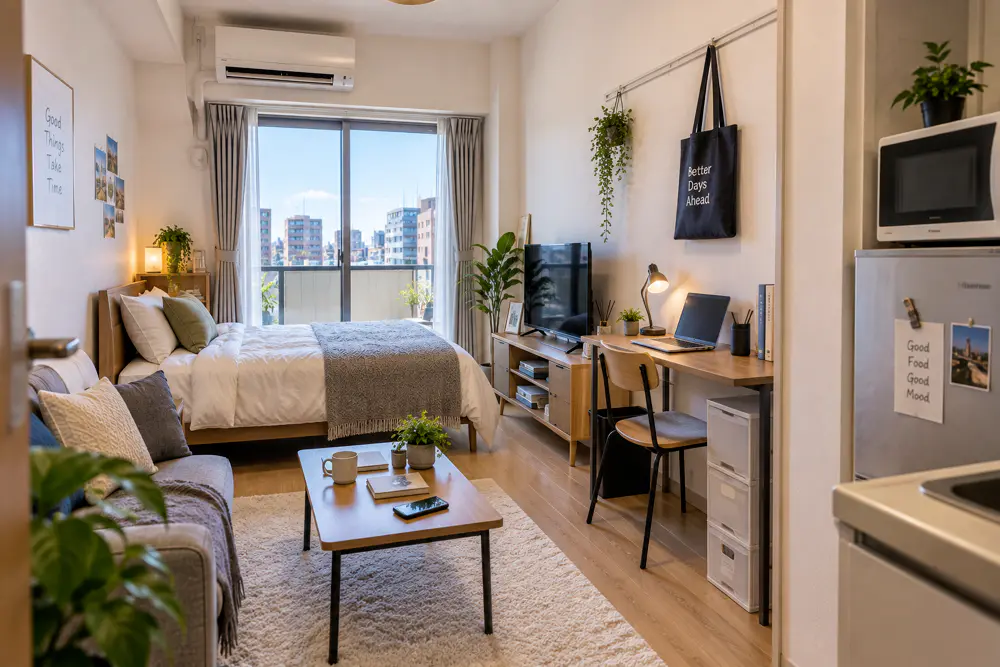
Housing costs in Japan vary widely depending on the city, neighborhood, property size, building age, and distance from the nearest station. Tokyo generally has higher rents than other major cities, which means housing is likely to account for a larger share of overall living expenses.
As of May 2026, the average asking rents for apartments in major Japanese cities were as follows.
| Area | 30 m² or Less | 30–50 m² | 50–70 m² | Key Characteristics |
|---|---|---|---|---|
| Tokyo’s 23 Wards | Approx. ¥113,000 | Approx. ¥181,000 | Approx. ¥257,000 | Excellent transportation and everyday convenience, but higher rents |
| Osaka City | Approx. ¥73,000 | Approx. ¥115,000 | Approx. ¥168,000 | Major-city convenience with generally lower rents than Tokyo |
| Nagoya City | Approx. ¥65,000 | Approx. ¥84,000 | Approx. ¥105,000 | Good balance between space and housing costs |
| Fukuoka City | Approx. ¥66,000 | Approx. ¥94,000 | Approx. ¥139,000 | Relatively affordable rents with convenient urban living |
Among the four cities compared, Tokyo’s 23 wards had the highest rents across all unit-size categories, with the gap widening as apartment size increased.
By contrast, Osaka, Nagoya, and Fukuoka generally offer similarly sized homes at lower rents than Tokyo’s 23 wards. For households that need more space in particular, the choice of city can make a substantial difference in monthly housing costs.
However, the figures in the table represent average asking rents. Even within the same city, rents vary depending on factors such as whether the property is in the city center or the suburbs, its distance from the nearest station, the age of the building, and available amenities. In Tokyo, moving farther from the city center can reduce rent, although this may result in longer commute times and higher transportation costs.
When choosing where to live, it is important to consider not only rent but also the size of the home, transportation access, and the surrounding neighborhood to find an area that fits your lifestyle.
Compare rents by area in Tokyo and learn how to choose a rental property
Upfront Rental Costs and What Foreign Residents Should Know When Renting in Japan
The figures discussed above cover regular monthly living expenses. When renting a new home in Japan, however, tenants often need to pay the equivalent of around four to six months’ rent upfront. This differs from the deposit systems commonly used in many other countries.
Typical Upfront Costs When Signing a Lease
The typical upfront costs for a rental property are as follows.
- Security deposit (shikikin): 1–2 months’ rent — Generally used to cover restoration or repair costs when you move out, with any remaining balance returned to the tenant.
- Key money (reikin): 1–2 months’ rent — A nonrefundable payment to the landlord that is common in the Japanese rental market.
- Real estate agency fee: Up to one month’s rent plus consumption tax — A commission paid to the real estate agency for arranging the lease.
- Guarantor company fee: Around 0.5–1 month’s rent — Paid to a guarantor company that acts in place of a personal guarantor. Annual fees or renewal charges may also apply after the initial payment.
- Fire insurance: Around ¥15,000–¥20,000 for a two-year policy — Enrollment is required for many rental properties.
For example, if you rent a property for ¥150,000 per month (about US$970), you can expect initial costs of roughly ¥600,000–¥900,000 (about US$3,870–5,810), equivalent to around four to six months’ rent.
What Foreign Residents Should Know Before Renting a Home in Japan
Foreign residents should also keep the following points in mind when preparing to rent a home in Japan.
- Using a guarantor company may be required: Many foreign residents do not have someone in Japan who can act as a personal guarantor, so it is often more practical to look for properties that accept or require a guarantor company.
- Identification documents such as a residence card are usually required: Applicants are generally asked to provide a valid residence card, passport, and documents confirming their employment status. Some properties may not accept tenants staying in Japan on a short-term visitor visa.
- Some properties still do not accept foreign tenants: Although this has become less common, some landlords may still choose not to rent to foreign nationals. Looking for properties with a history of accepting international tenants or working with an agency experienced in assisting foreign residents can help expand your options.
- Lease documents are generally in Japanese: Residential lease agreements are typically prepared only in Japanese. To avoid signing a contract you do not fully understand, consider working with an English-speaking real estate agency or having a third party translate and review the documents before signing.
Learn more about renting a property in Japan and what to watch for
Taxes and Health Insurance: What They Add to Your Budget
The monthly living-cost estimates earlier in this article are based on typical household consumption spending and do not fully isolate taxes and insurance premiums, which are billed separately and can add a meaningful amount to your actual monthly outlay, especially for those who are self-employed or not enrolled in a company's employee insurance.
- Income tax and resident tax: Income tax is withheld from salary throughout the year for company employees. Resident tax (juminzei), paid to your local municipality, is calculated based on the previous calendar year's income, so new arrivals to Japan typically do not owe resident tax during their first year of residence; it usually begins the following June.
- Company employees: Health insurance and employees' pension (kosei nenkin) premiums are deducted directly from salary alongside income tax and resident tax, and are shared between employee and employer.
- Self-employed residents, freelancers, and those without employer coverage: These individuals generally enroll in National Health Insurance (kokumin kenko hoken) and the National Pension (kokumin nenkin) through their local municipal office, with premiums billed separately based on income, age, and the municipality of residence.
For example, Tokyo's Minato City published early-2026 rate tables showing that a single National Health Insurance enrollee under age 40 with approximately ¥4 million in annual income would owe roughly ¥371,000 per year, or about ¥31,000 per month. Rates differ by ward and city, so this is illustrative rather than a fixed nationwide figure.
When budgeting to move to Japan, it is worth confirming with your employer, a local ward or city office, or a tax professional how these charges will apply to your specific visa status and employment type, since the amounts can vary significantly between salaried employees and the self-employed.
Frequently Asked Questions About the Cost of Living in Japan
Is $2,000 a Month Enough to Live in Japan?
For a single person, roughly US$2,000 (about ¥310,000 at ¥155/US$1) is close to or slightly above the estimated monthly budget for Tokyo (¥200,000–¥280,000) discussed earlier in this article, and comfortably above the national average outside Tokyo (¥170,000–¥220,000). It can work for a modest lifestyle in central Tokyo or a more comfortable one in regional cities such as Osaka, Nagoya, or Fukuoka, though rent for a larger or more centrally located apartment could still push costs higher.
What Is a Good Salary in Tokyo for a Foreign Resident?
The national average annual salary is approximately ¥4.78 million (about US$30,800), with full-time regular employees averaging approximately ¥5.45 million (about US$35,200), according to the National Tax Agency's most recent survey. Earning at or above this range generally allows a single person to cover typical living costs in Tokyo with some room for savings, though the comfortable threshold rises with family size, preferred neighborhood, and lifestyle.
Is Japan Cheaper Than the U.S. or U.K. to Live In?
Tokyo's overall cost of living is generally lower than that of New York or London, particularly for housing, according to Numbeo's 2026 Cost of Living Index and Mercer's 2024 Cost of Living City Ranking, where Tokyo ranked 49th globally, well below London and New York. A weaker yen in recent years has reinforced this gap, though exchange-rate movements can change the comparison over time.
How Much Money Do You Need to Move to Japan?
Beyond ongoing monthly living costs, renters should budget four to six months' rent for upfront costs such as the deposit, key money, agency fee, guarantor fee, and fire insurance, as outlined earlier in this article. It is also worth setting aside funds for the first few months of expenses before income from a new job or business begins, since resident tax and some setup costs may be due even before your first paycheck arrives.
Conclusion
The cost of living in Japan varies by household size, location, and home size. Housing is one of the biggest factors, with rents in Tokyo generally higher than in major regional cities. However, compared with other major global cities, Tokyo is not necessarily exceptionally expensive.
When planning your budget, consider both typical living expenses and local rent levels. Japan Property provides property listings and buying guides for overseas buyers considering long-term residence or property ownership in Japan.