
What Is a Unit Bath in Japan? A Guide to Japanese Bathroom Layouts and Features
Jun 24, 2026
For many foreigners searching for housing in Japan, the bathroom layout can be one of the most confusing aspects to understand. In particular, the term “unit bath” appears frequently in property listings, but its meaning isn’t always immediately clear.
This article explains the basic concept of a unit bath and introduces the bathroom layouts and features commonly found in Japanese homes. It also covers unique elements such as the ofuro (bathtub), bidet toilets (washlets), and bathroom dryers—key features that define the Japanese unit bath and other bathroom styles in Japan.
Two Common Bathroom Types in Japanese Homes
In Japan, residential bathrooms generally fall into two main categories. One is the unit bath, commonly found in compact rental properties such as one-room (1R) or studio apartments. The other is a separate bathroom layout, where the bathtub, toilet, and sink are all in different spaces—typical of condominiums and detached houses.
While many homes overseas combine the bath, shower, toilet, and sink into a single space, Japan’s bathroom design varies depending on property size and purpose. Let’s take a closer look at how these two bathroom types differ.
The Japanese Unit Bath
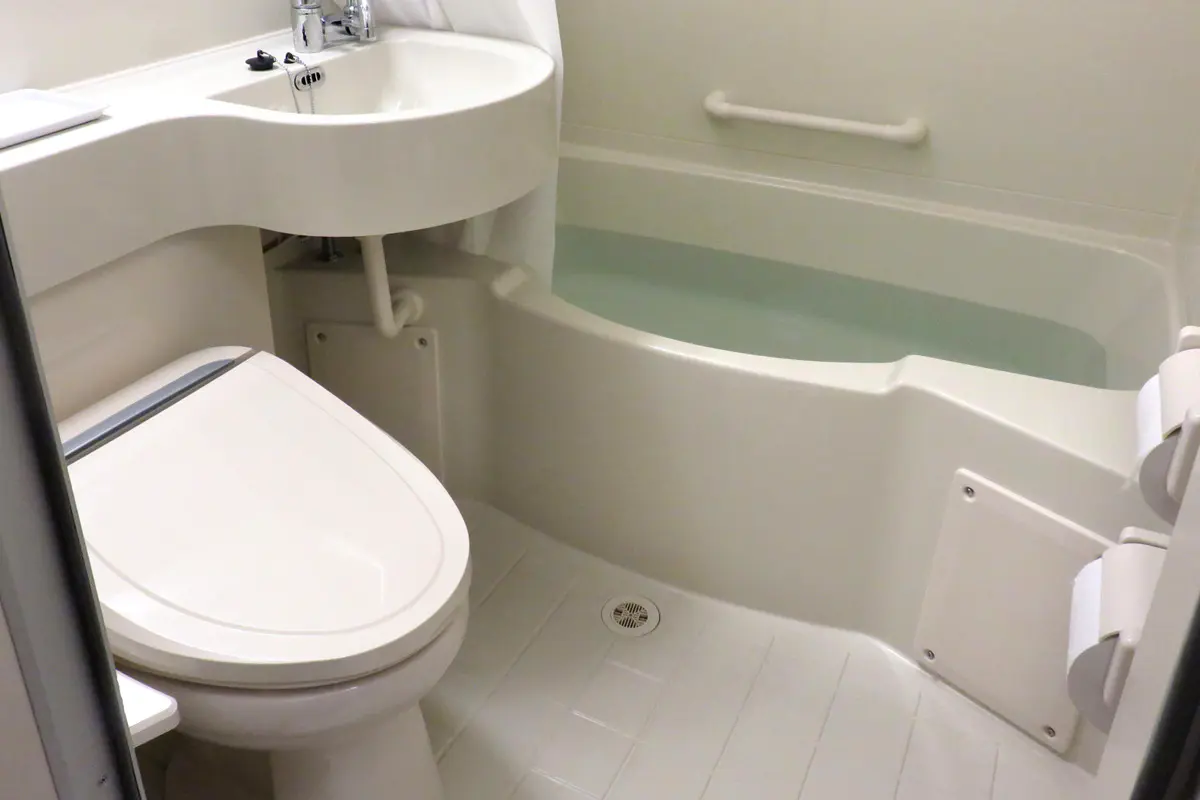
A unit bath is a bathroom design that combines the bathtub, toilet, and sink into a single, compact space. In Japan, unit baths are most commonly found in smaller urban apartments, such as one-room or studio rentals.
Because Japan has limited land and densely populated cities, living spaces—especially in urban areas—tend to be smaller. As a result, the Japanese unit bath became a practical solution for maximizing limited space.
In contrast to many overseas homes where the bathroom, toilet, and sink are separate, the Japanese unit bath integrates all these functions into one area. This compact, all-in-one layout is a distinctive feature of housing in Japan.
Separate Bathroom Layout
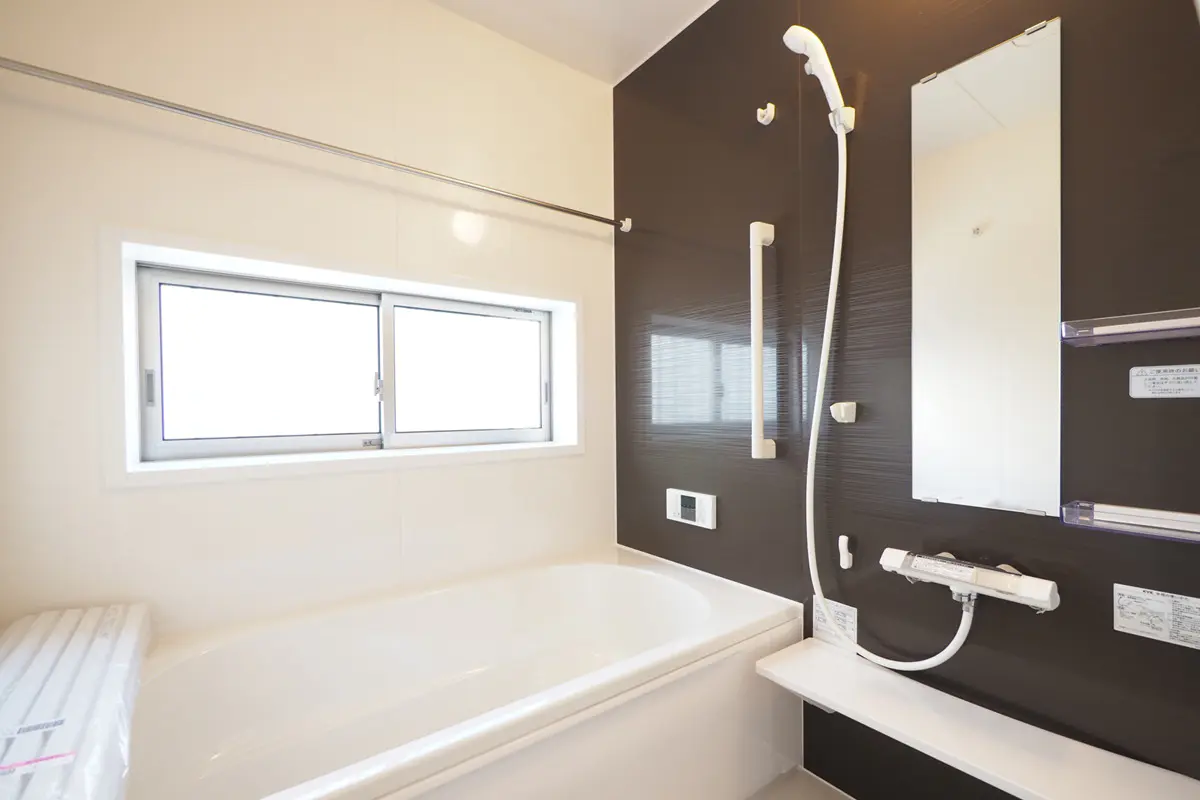
A separate bathroom layout refers to a design where the bath, toilet, and sink are placed in separate spaces. This type is commonly found in Japanese condominiums, detached homes, and larger rental properties—e.g., a 2LDK.
In this layout, the bathing area typically includes both a bathtub and a shower, while the toilet and sink are located in separate areas. This separation improves usability and privacy, allowing multiple people to use the facilities at the same time more comfortably.
Although bathrooms and toilets are often combined in many countries, separating them is the standard approach in Japan. This independent layout is considered the typical bathroom setup in many Japanese homes.
Learn more about Japanese apartment layouts and LDK terms
The Basic Bathroom Layout in Japanese Homes
Dividing bathroom-related facilities into separate spaces makes Japanese bathrooms distinctly different from many overseas homes. Below is an overview of the typical components found around the bathroom area in Japanese homes.
Shower
In Japan, a shower is typically installed inside the bathing area. In many homes, there is a dedicated space for washing your body separate from the bathtub. It is common to wash yourself with the shower before soaking in the tub. Having both a washing area and a bathtub within the same room is one of the distinctive features of Japanese bathrooms.
Tub / Ofuro
Most Japanese homes include a bathtub, known as an ofuro. While homes overseas often rely on showers only, bathing in a tub to warm the body is an important daily habit in Japan. Japanese bathtubs are usually deeper than those in other countries, allowing for a full-body soak even in compact spaces.
Vanity
In many Japanese homes, the vanity (sink area) is located outside the bathing area. This space is used for brushing teeth, washing up, and getting ready. Some homes feature a separate washroom with additional storage or even space for a washing machine, creating a more efficient daily living flow.
Toilet
In Japan, the toilet is often located in a completely separate room from the bathing area. While it is common in some countries for the toilet to share space with the bathroom, Japanese homes prioritize privacy and usability by separating them. Another distinctive feature is the widespread use of high-tech bidet toilets, often referred to as washlets.
Washing Machine Space
Many Japanese homes include a designated space for a washing machine. This area is often located near the vanity or next to the bathroom, allowing for a more efficient layout that connects bathing and laundry activities. While washing machines in other countries may be placed in kitchens or basements, in Japan they are commonly positioned within the bathroom area.
Common Features Found in Japanese Bathrooms
In Japanese homes, bathrooms often include a variety of built-in features designed to improve comfort and convenience. Some of these are unique and not commonly found in homes overseas. Below are some of the most typical bathroom features you’ll encounter in Japan, whether in a unit bath or a separate layout.
Bath Reheating System
A bath reheating system allows you to reheat the water in the bathtub after it has cooled down. Even if some time has passed since the bath was filled, you can bring it back to a comfortable temperature.
In Japan, it is common for family members to take baths one after another, which is why this feature is widely installed. In property listings, you may see it labeled as a “bath reheating system,” making it an important feature to check when evaluating a Japan unit bath or other bathroom setups.
Bathroom Dryer
A bathroom dryer is a system that circulates warm or dry air within the bathroom to remove moisture and dry laundry.
Because many Japanese homes have limited balcony space and the climate can be humid or rainy, indoor drying is common. For this reason, bathroom dryers are often installed to help dry clothes efficiently. They are also used regularly to prevent mold by keeping the bathroom space dry, including in Japanese unit baths.
Washlet / Bidet Toilet
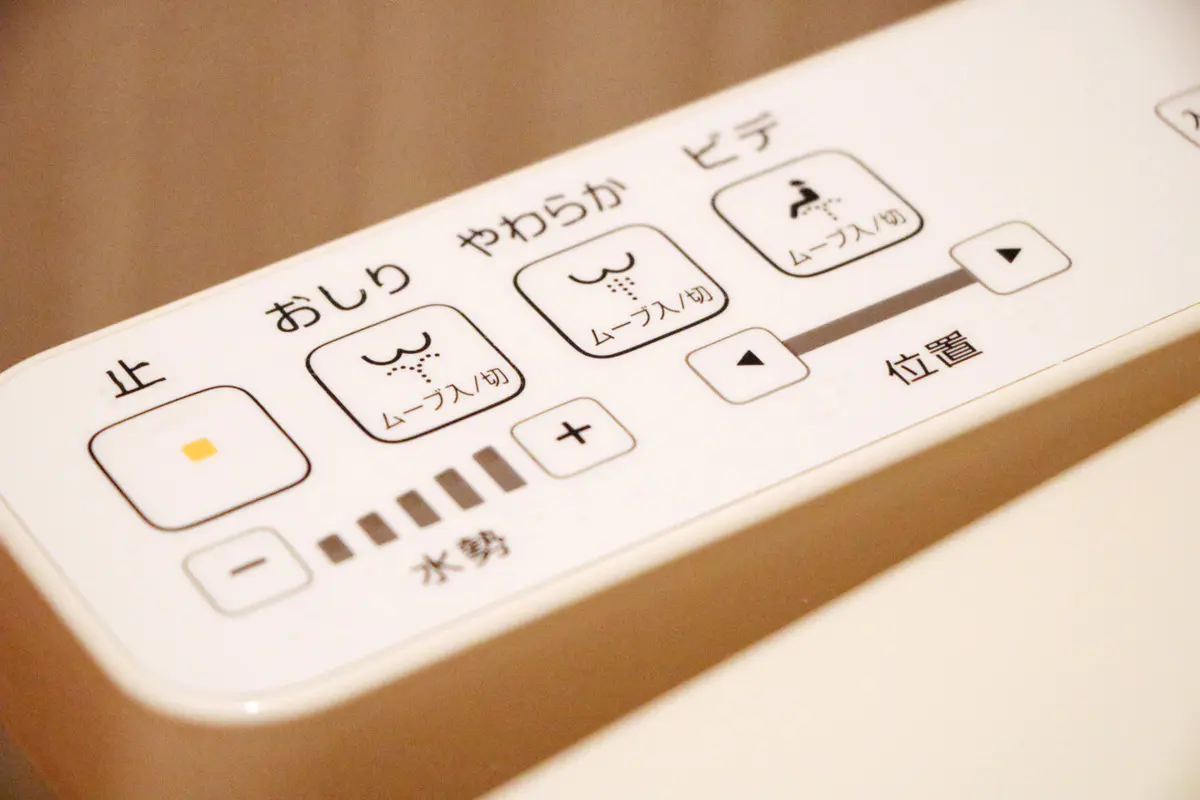
A washlet, or bidet toilet, is equipped with a built-in system that uses warm water for cleaning. This feature is widely used in homes and hotels throughout Japan and is known for enhancing comfort and hygiene.
Since bidet toilets are still not standard in many countries, they are often considered a feature that contributes to making Japanese homes unique. In some properties, they come as a standard fixture, highlighting another distinctive aspect of living in Japan—even in compact spaces like a unit bath.
See what makes Japanese homes unique from a foreigner's perspective
Frequently Asked Questions About Bathrooms in Japan
Here are some of the most common questions people have about bathrooms in Japan.
Does “unit bath” mean just a bathtub?
A unit bath does not refer to a bathtub alone. It describes a bathroom layout where the bathtub, toilet, and sink are combined into a single, compact space.
In Japan, this design is commonly used to maximize limited space, especially in one-room (1R) and studio apartments. Because the layout differs from typical bathrooms overseas, understanding what a Japanese unit bath is can help you better navigate housing options in Japan.
Do all homes in Japan have a bathtub (ofuro)?
Since soaking in a bathtub is a common bathing practice in Japan, many homes are equipped with an ofuro. However, not every property includes one.
In smaller apartments, you may find a Japanese unit bath that combines all fixtures, or in some cases, a shower-only setup. Bathroom configurations vary depending on the size and type of property, so it’s important to check the details when searching for housing.
Conclusion
A unit bath is a type of bathroom commonly found in Japan that integrates the bathtub, toilet, and sink into a single space. It is most often used in compact homes and rental properties, making it a distinctive feature of Japanese housing design.
In contrast, larger homes and condominiums typically use a separate bathroom layout, where the bath and toilet are in different spaces. When looking for a property in Japan, checking the bathroom type, size, and layout of the washing area can help you better visualize your daily living experience.